Natural Tooth Preservation & Certified MINISH Dental Care in Magok, Seoul

Press & Column
Think twice about implants after a failed root canal treatment.
Get answers to common dental implant FAQs: lifespan, recovery time, age limits, bone grafting, and diabetes concerns. Learn more from specialist dentists today.
Schedule a Consultation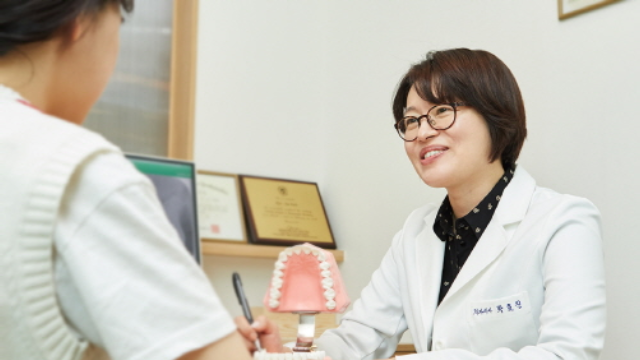
If you experience tooth sensitivity due to severe cavities or trauma, it indicates that inflammation has developed in the nerve canal inside the tooth. The solution is root canal treatment; while most patients achieve successful results, those who do not may be advised to have the tooth extracted or receive an implant.
However, even if root canal treatment is difficult or has failed, it is worth reconsidering the decision before extraction. This is because natural teeth possess many advantages that cannot be easily replicated, including chewing strength, aesthetics, durability, comfort, and hygiene management.
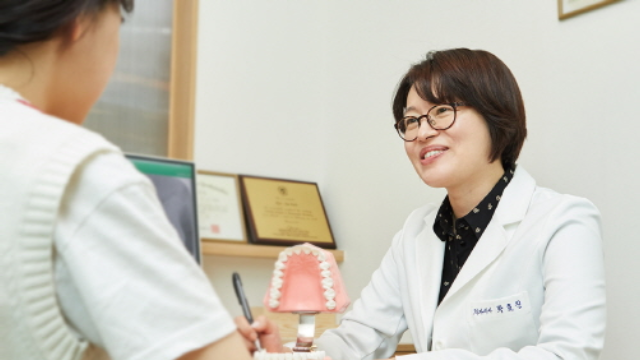
Dr. Park Hyo-jin, Director of Magok Pureunmaeum Dental Clinic near Balsan Station in Gangseo-gu (a specialist in Conservative Dentistry), explained, “Even for teeth where standard root canal treatment is impossible, there are methods to treat them without extraction. These are apical resection and tooth replantation. Simply put, these treatments can be described as high-difficulty or surgical root canal treatments. Like standard root canal treatment, they treat the contaminated nerve canal to allow the tooth to be used again.” She added, “Through apical resection and tooth replantation, it is possible to save teeth where root canal treatment has failed or teeth where inflammation has deepened to the root tip, making treatment impossible with standard methods.” Furthermore, these treatments are covered by National Health Insurance, making the financial burden relatively low. However, due to their high level of difficulty, they may be difficult to attempt at general dental clinics. Apical resection and tooth replantation are available only at a very small number of clinics specializing in root canal treatment or at university hospitals. The key to this is treatment by a specialist in Conservative Dentistry. Although not widely known, just as one visits an internal medicine doctor for a stomachache or a dermatologist for a skin condition, the dental clinic one visits depends on the location of the ailment and the necessary treatment. Conservative dentistry is a specialized field focused on saving teeth with contaminated root canals through treatments such as root canal therapy, apical resection, and tooth replantation; specialists in this field constitute a tiny minority, making up only about 2% of all dentists. Therefore, even if root canal therapy fails, checking whether the clinic is staffed by a specialist capable of performing advanced procedures like apical resection and tooth replantation can offer a second chance to save your natural tooth, while ensuring that implants are performed only where absolutely necessary.
However, it is not advisable to focus solely on saving natural teeth at all costs. This is because if a specialist in conservative dentistry determines through a meticulous and thorough diagnosis that there is absolutely no possibility of tooth recovery, even procedures such as apical resection or tooth replantation offer no hope.
In such cases, it is best to proceed with implants promptly; however, making such a decision in collaboration with a specialist in conservative dentistry can increase accuracy. Furthermore, to assess the situation from multiple perspectives, it is even more beneficial to have a collaborative system in place that involves specialists from various fields, such as periodontology or prosthodontics, in addition to conservative dentistry specialists.