Natural Tooth Preservation & Certified MINISH Dental Care in Magok, Seoul

Dental Guide
Single-Visit Root Canal in Korea: Step-by-Step Guide
A single visit root canal in Korea cleans, shapes and seals a tooth's canals in one appointment. Here is every step, plus who qualifies and who does not.
Schedule a ConsultationWhat Happens During a Single-Visit Root Canal in Korea: A Step-by-Step Guide for US Patients
Medically reviewed by Dr. Park Hyo Jin, Specialist in Conservative Dentistry / Director
A single visit root canal in Korea follows the same clinical sequence as root canal treatment anywhere else — the infected or inflamed pulp is removed, the canals are cleaned and shaped, and the canal space is filled and sealed — except that all of it is completed in one appointment instead of two or three. Whether your tooth can be treated that way is a clinical decision, not a scheduling preference. It depends on the condition of the pulp, the shape of your root canals, and whether any infection can be controlled during a single sitting. This guide walks through each step of the appointment, explains exactly which cases qualify, and describes what happens when a tooth needs staged care instead.
What "Single-Visit" Root Canal Treatment Means
Single-visit root canal treatment means the cleaning, shaping, filling and sealing of the root canals are finished in one appointment rather than spread across several. Root canal treatment itself — the field of dentistry known as endodontics (root canal care) — removes infected or inflamed pulp from inside a tooth, cleans and seals the root canals, and aims to preserve the natural tooth. The pulp is the soft tissue inside the tooth that contains nerves and blood vessels and supplies nourishment to the tooth. According to the American Dental Association's MouthHealthy resource, pulp can become infected after a deep cavity, repeated dental procedures on the same tooth, a crack or fracture, or an injury to the tooth.
The American Dental Association describes root canal treatment as usually taking one or two office visits. In a conventional two-visit protocol, the dentist cleans and shapes the canals at the first appointment, places a medicated dressing and a temporary filling, then returns at a second appointment to fill and seal. A single-visit approach compresses those stages. Magok Pureunmaeum Dental Clinic in Seoul lists single-visit root canal treatment as one of its main services and describes the defining feature simply: completion in one treatment visit, with the actual appointment length varying according to tooth anatomy and complexity.
For patients traveling from the United States, the appeal is practical. The clinic notes that patients may prefer a single-visit approach because it can reduce the number of dental appointments and make treatment more convenient. That convenience only matters, though, if your tooth is genuinely a candidate.
The Evaluation That Comes First: Pulp Condition and Canal Anatomy
Before any single-visit root canal is agreed to, the tooth has to be assessed — and this assessment, not the patient's travel calendar, determines the plan. Magok Pureunmaeum Dental Clinic describes its diagnostic process for this procedure directly: the dentist evaluates the tooth, the symptoms, the pulp condition and the root anatomy, usually with dental imaging, before deciding the treatment approach. The clinic also states that a dental examination and appropriate imaging are needed specifically to determine whether single-visit treatment is appropriate.
Two variables carry most of the weight in that decision:
- Pulp condition. A tooth with inflamed but still-living pulp behaves differently from a tooth whose pulp has died and become infected, and differently again from a tooth with an established infection at the root tip.
- Canal anatomy. The number, curvature, width and branching of the canals dictate how long cleaning and shaping will take, and how predictably the canal system can be sealed in one sitting.
Imaging is what makes both variables visible. Magok Pureunmaeum Dental Clinic publicly lists cone beam computed tomography (CBCT), a 3D dental scanner, as available at the clinic, with one CBCT unit, alongside its 3D CT digital diagnostic system. The American Association of Endodontists explains that CBCT provides three-dimensional views of a patient's teeth and surrounding structures, captured as the machine rotates around the head using a cone-shaped X-ray beam. The AAE also notes that in certain cases CBCT images greatly enhance a clinician's ability to diagnose, evaluate and treat. It is not meant to be routine: the joint AAE and American Academy of Oral and Maxillofacial Radiology position statement frames CBCT as a selective tool, chosen on clinical indication rather than applied to every case.
If you are researching a root canal dentist in Seoul from abroad, this is the part of the process worth asking about first. A clinic that commits to "one day" before it has looked at your pulp condition and canal anatomy is promising a schedule, not a diagnosis.
Inside the Appointment: The Treatment Step by Step
The treatment visit itself follows a fixed clinical order, and Magok Pureunmaeum Dental Clinic summarizes it as: the tooth is numbed and isolated, the infected pulp is removed, the canals are cleaned and shaped, then filled and sealed, and the tooth is subsequently restored. Here is what each of those stages involves.
Step 1: Anesthesia and isolating the tooth
Local anesthesia is generally used to keep the procedure comfortable, according to the clinic's own description of this service. The ADA notes that there is little to no pain during root canal treatment because the dentist numbs the area first, and that most patients no longer feel the pain they arrived with once treatment is complete.
The tooth is then isolated with a dental dam — a latex or non-latex sheet placed around the tooth. This is not an optional refinement. The American Association of Endodontists states in its position statement that tooth isolation using the dental dam is the standard of care and is integral and essential for any nonsurgical endodontic treatment. The AAE gives two reasons: only dental dam isolation minimizes the risk of contaminating the root canal system with the bacteria normally present in the mouth, and the dam prevents ingestion or aspiration of dental materials, irrigants and instruments. If you are comparing clinics anywhere in the world, asking whether a dental dam is used is a fair and specific question.
Step 2: Opening the tooth and removing the pulp
The dentist creates an opening through the top of the tooth to reach the pulp chamber and the canal openings beneath it. The inflamed or infected pulp tissue is then removed from the chamber and from each canal. This is the step that resolves the source of most root canal pain, because the tissue carrying the inflammation is taken out.
Step 3: Cleaning, shaping and disinfecting the canals
Each canal is cleaned along its full length and shaped so that it can later be filled completely. The ADA describes this stage as cleaning inside the tooth and each root canal, with the dentist possibly treating the tooth with germ-killing medicine. Disinfection of the root canal system is one of the primary objectives of endodontic treatment, which is why isolation and irrigation matter as much as instrumentation.
This is also the step that most often decides whether one visit is realistic. A single straight canal in a front tooth is a different proposition from three or four curved canals in a lower molar.
Step 4: Filling and sealing the canal space
Once the canals are clean, shaped and dry, they are filled and sealed. The ADA describes filling the root canals with a rubber-like material to seal them against future infection. Magok Pureunmaeum Dental Clinic frames the immediate goal of the procedure in the same terms: removal of infection and sealing of the canals.
Step 5: Restoring the tooth
Sealing the canals is not the end of treatment. The tooth still needs a restoration that rebuilds its structure and protects it under chewing load. The ADA explains that a temporary filling may be placed to protect the tooth until a definitive restoration — a permanent filling or a crown — can be placed at the earliest opportunity, and that a metal or plastic post is sometimes placed inside the canal to help retain the filling material and support a crown.
Magok Pureunmaeum Dental Clinic's aftercare guidance reflects this: patients are advised to avoid excessive pressure on the treated tooth until it is properly restored. For a US patient planning travel, the restoration stage is the part to clarify in advance, because "the root canal is done in one visit" and "the tooth is fully restored in one visit" are not automatically the same statement.
Who Qualifies for One Visit, and Who Needs Staged Care
A good candidate for single-visit treatment is a patient whose tooth condition can be safely and predictably treated in one visit after clinical and radiographic evaluation — that is the clinic's own stated candidacy criterion. It also describes a good candidate more broadly as someone with an infected, inflamed or damaged dental pulp where root canal treatment is recommended to preserve the natural tooth, and where the tooth can be adequately cleaned, shaped and sealed in one appointment.
The clinic is equally specific about the root canal candidate requirements that rule one visit out. Treatment may need to be postponed or divided into multiple visits when any of the following apply:
- Severe swelling around the tooth
- An active or complex infection
- Difficult root canal anatomy
- Drainage that cannot be controlled during the appointment
- Other conditions that make complete treatment in one visit unsuitable
More generally, the clinic notes that patients with complex infection, difficult canal anatomy, significant swelling, or cases requiring staged treatment may not be suitable for one-visit treatment. Its conservative dentistry department adds that suitability for any tooth-preserving treatment depends on tooth condition, remaining tooth structure, infection, periodontal (gum) status and overall oral health.
Being told your tooth needs two or three visits is not a downgrade in care. It usually means the clinician wants time between appointments to let a medicated dressing act on a persistent infection, or wants to confirm that symptoms have settled before sealing the canal permanently.
What the Evidence Says About One Visit Versus Several
Published evidence does not show that single-visit root canal treatment produces worse long-term results than multi-visit treatment, but it also does not show that the two are identical on every measure. A 2017 systematic review and meta-analysis in BMJ Open pooled 29 controlled trials covering 4,341 patients. Across 10 trials and 1,257 teeth, the risk of long-term complications was not significantly different between single-visit and multiple-visit treatment, with a risk ratio of 1.00 (95% CI 0.75 to 1.35), rated as weak evidence. Across 20 studies and 3,008 teeth, the risk of postoperative pain also did not differ significantly, with a risk ratio of 0.99 (95% CI 0.76 to 1.30), rated as moderate evidence.
The same analysis found one difference. Across 8 studies and 1,110 teeth, the risk of a flare-up — an acute exacerbation during or after treatment — was significantly higher after single-visit treatment, with a risk ratio of 2.13 (95% CI 1.16 to 3.89), though the authors graded that finding as very weak evidence. Their clinical conclusion was measured: dentists can provide root canal treatment in one or multiple visits, and given the possibly increased risk of flare-ups, multiple-visit treatment might be preferred for certain teeth, such as those with a lesion at the root tip.
Cochrane's review of the same question reached a similar place, finding no detectable difference in radiological success between single and multiple visits. Taken together, the literature supports the practical position that Magok Pureunmaeum Dental Clinic describes: one visit is a legitimate option for suitable teeth, and staging is the appropriate answer for the rest.
Root Canal Recovery Time and What the Tooth Can Be Expected to Do
Most patients can return to normal daily activities shortly after treatment, according to the clinic's documented recovery guidance. Mild tenderness or sensitivity may remain for several days and usually improves gradually. The clinic notes that soreness is often most noticeable when biting, and that healing around an infected root can take longer than the surface discomfort suggests. Common temporary effects it lists include mild tooth or gum soreness, tenderness on biting, minor sensitivity, and discomfort around the treated area.
Relief from the original tooth pain may come soon after treatment, though tenderness around the tooth can persist for a while. The condition of the tooth and surrounding tissues is then monitored at follow-up. The clinic is explicit that the root canal itself is complete once the canals have been cleaned, shaped and sealed, but the long-term result depends on proper restoration of the tooth and successful healing of the surrounding tissues — which takes longer to assess.
Risks deserve the same plain treatment. The clinic lists possible complications as persistent infection or pain, incomplete removal of infection, missed or difficult-to-treat canals, separation of an instrument inside a canal, reinfection, and tooth fracture, with complex cases sometimes requiring additional treatment. No dentist can guarantee a specific outcome, and healing varies with anatomy and general health.
Long-term data are encouraging but not uniform. One retrospective observation of primary root canal treatment, following teeth for between 5 and 37 years, reported cumulative tooth survival of roughly 97% at 10 years. Other cohorts have reported noticeably lower figures. Results depend on tooth type, the quality of the final restoration, oral hygiene and how "success" is defined in each study. The ADA's own patient guidance puts it in everyday terms: with proper care — brushing twice daily, cleaning between the teeth daily, and regular dental visits — a restored tooth can last a long time.
Planning Root Canal Treatment Abroad as a US Patient
If you are considering root canal treatment abroad, the logistics deserve as much attention as the clinical steps. The CDC's Yellow Book notes that dental care is the most common form of medical tourism among US residents, driven in part by the rising cost of dental care in the United States and the number of people who are uninsured or underinsured for dental treatment. The CDC also advises travelers that dentists in destination countries might not be subject to the same licensure oversight as their US counterparts, and recommends discussing the plan for handling any complication with both your US dentist and the treating clinician abroad before you travel.
Two CDC recommendations are especially relevant to a root canal:
- Request copies of your overseas records in English, and give them to any dentist you see afterwards at home.
- Clarify in advance which services are included in the quoted cost and where any follow-up care would take place.
On the credentialing question, Magok Pureunmaeum Dental Clinic is a Registered Medical Institution for Attracting Foreign Patients, certified by Korea's Ministry of Health and Welfare in compliance with the Medical Overseas Expansion and Foreign Patients Attraction Act. That registration confirms the clinic is authorized under Korean law to treat international patients; it is a regulatory registration rather than a clinical quality accreditation, and it is worth understanding it as exactly that.
Practically, US patients typically fly into Incheon (ICN) or Gimpo (GMP). The clinic sits on the 3rd floor of Woosung SB Tower at 385 Gangseo-ro in Gangseo-gu, Seoul, about 50 meters from Exit 2 of Balsan Station on Seoul Metro Line 5. US passport holders can generally enter Korea visa-free for short stays via K-ETA, though entry rules change and should be confirmed with official sources before booking. Consultation hours are Monday and Wednesday to Friday from 9:30 to 18:30 KST, Tuesday from 9:30 to 20:30, and Saturday from 9:30 to 14:00 with no lunch break; the clinic is closed on Sundays and public holidays. Enquiries and appointment requests go through the clinic's contact page.
Who Would Be Treating You in Seoul
Root canal cases at Magok Pureunmaeum Dental Clinic fall under the clinic's Conservative Dentistry and Endodontics department, led by Director Dr. Park Hyo Jin. Dr. Park is a licensed dentist in South Korea and a board-recognized specialist in Conservative Dentistry under Korean specialist registration — a Korean credential, not a US board certification. Dr. Park holds a Master's degree in Dentistry from Wonkwang University Graduate School and completed an internship and residency in Conservative Dentistry, and has over 22 years of clinical experience. Professional memberships include full membership of the Korean Academy of Conservative Dentistry, the Korean Academy of Endodontics and the Korean Academy of Esthetic Dentistry.
The clinic's stated philosophy shapes how these cases are approached: preserve natural teeth as much as possible, design each plan with the mindset of treating one's own family, and perform only the treatments that are genuinely necessary. That philosophy is also why root canal treatment exists as a service at all — it is an alternative to extraction. Where a tooth cannot be saved, the clinic lists the documented alternatives as multi-visit root canal treatment, extraction, or other tooth-preserving approaches. You can read more about the practice, which was established in 2017, on its about page. The clinic states that multilingual support is available across its patient services, while interpreter arrangements for a specific case are determined after consultation.
Questions to Ask Before You Book
A short, specific list of questions will tell you more about a clinic than any brochure. Before agreeing to single-visit treatment anywhere, consider asking:
- What did the imaging show about my pulp condition and the number and shape of my canals?
- Is one visit clinically appropriate for this particular tooth, or is it being offered mainly to fit my travel dates?
- Will a dental dam be used for isolation?
- Will the tooth be permanently restored on the same trip, or will I leave with a temporary filling?
- What is the plan if the tooth cannot be completed in one visit after all?
- Which records will I receive in English to take back to my dentist at home?
Magok Pureunmaeum Dental Clinic's own preparation guidance points the same direction: have a dental examination, and discuss your symptoms, medical history, medications, allergies and previous dental treatment with the dentist before treatment begins.
The Bottom Line
- A single-visit root canal completes cleaning, shaping, filling and sealing of the canals in one appointment, and commonly takes about one to two hours depending on the tooth, number of canals, infection and case complexity.
- Candidacy is decided by examination and imaging of your pulp condition and root canal anatomy — not by your travel schedule.
- Severe swelling, active or complex infection, difficult canal anatomy or uncontrolled drainage are documented reasons a tooth is staged across multiple visits instead.
- Pooled trial evidence shows no significant difference in long-term complications or postoperative pain between one-visit and multi-visit treatment, though one meta-analysis found a higher flare-up risk after single-visit care on very weak evidence.
- The canals being sealed is not the finish line; the tooth still needs a definitive restoration, so confirm before traveling whether that happens on the same trip.
Frequently Asked Questions
How long does a single-visit root canal appointment actually take?
A single-visit root canal commonly takes about one to two hours, according to Magok Pureunmaeum Dental Clinic. The exact time depends on the tooth, the number of canals, the extent of infection and the overall complexity of the case. A single-canal front tooth is generally quicker than a multi-canal molar.
Will I be able to feel the procedure?
Local anesthesia is used to numb the tooth and surrounding area, so significant pain during treatment is generally not expected. The American Dental Association similarly notes there is little to no pain during root canal treatment because the area is numbed first. Mild sensitivity or soreness may follow for a few days, particularly when biting.
What is a dental dam and why does it matter for a root canal?
A dental dam is a thin latex or non-latex sheet placed around the tooth to isolate it during treatment. The American Association of Endodontists states that dental dam isolation is the standard of care and is essential for any nonsurgical root canal treatment. It minimizes contamination of the canal system by mouth bacteria and prevents instruments or irrigating solutions from being swallowed or inhaled.
Why would a dentist recommend two or three visits instead of one?
Staged treatment gives time between appointments for a medicated dressing to act on a persistent infection and for symptoms to settle before the canals are permanently sealed. Magok Pureunmaeum Dental Clinic lists severe swelling, active or complex infection, difficult root anatomy and uncontrolled drainage as reasons to divide treatment. A 2017 meta-analysis also suggested multiple-visit treatment might be preferred for certain teeth, such as those with a lesion at the root tip.
Is a crown always needed after root canal treatment?
Not always, but some form of definitive restoration is. The ADA describes a temporary filling being placed after treatment and later replaced with a permanent filling or a crown, sometimes with a post inside the canal to support it. Magok Pureunmaeum Dental Clinic advises avoiding excessive pressure on the treated tooth until it is properly restored, so the restoration plan should be settled before you travel home.
What should I do if the tooth still hurts after I return to the United States?
Contact a dentist rather than waiting to see whether it settles on its own. The CDC advises medical travelers not to delay seeking care if they suspect a complication during travel or after returning home, because earlier diagnosis tends to produce a better outcome. Keeping a copy of your Korean treatment records in English makes that first appointment at home considerably easier.
How should I prepare for the appointment itself?
Have a dental examination and share your symptoms, medical history, medications, allergies and previous dental treatment with the dentist beforehand. Magok Pureunmaeum Dental Clinic advises eating normally before the appointment unless you are given different instructions. Persistent tooth pain or swelling should be assessed by a dentist rather than left unexamined.
This article is for general informational purposes and does not constitute individualized medical advice, and it is not a self-diagnosis tool. Treatment candidacy, technique, and expected outcomes can only be determined through a consultation with a qualified dentist.
More Articles
Continue reading clinical guides from our dental specialists.
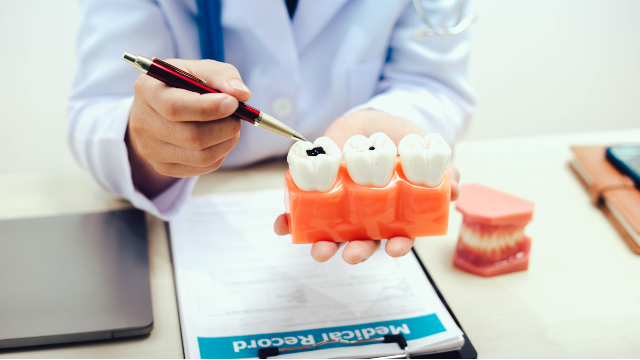
Cavity Treatment Korea: Resin Filling vs Inlay or Crown
A resin restoration is usually enough when decay is small and the tooth's walls and cusps are intact. Larger damage points to an inlay, onlay, or crown.
Learn More
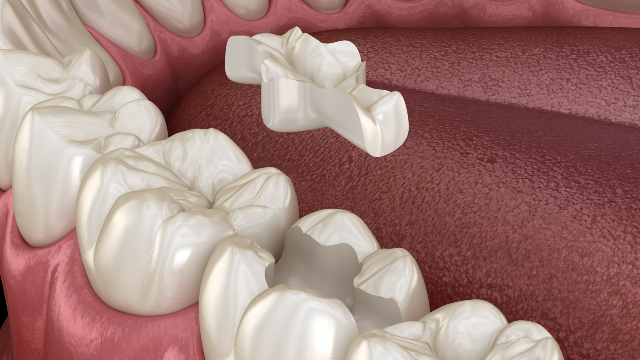
Inlay Onlay Dental Restoration vs Crown: How to Choose
An inlay or onlay restores a damaged tooth without full coverage. Published data show partial-coverage survival close to crowns, so choose by tooth left.
Learn More
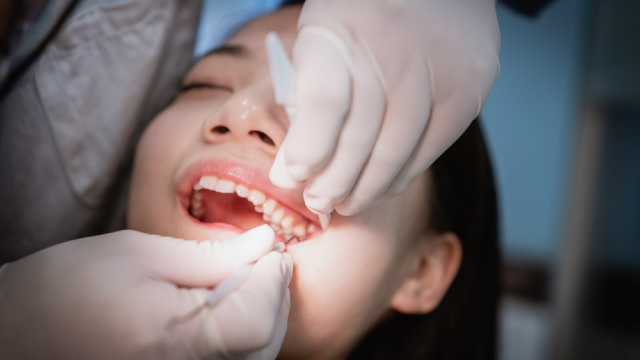
Minish Dental Treatment: How It Preserves Tooth Structure
Minish dental treatment is a biomimetic restoration that rebuilds damaged teeth with precision-made blocks while removing as little enamel as possible.
Learn More