Natural Tooth Preservation & Certified MINISH Dental Care in Magok, Seoul

Dental Guide
Dental Implants in Korea: Consultation to Final Crown
Dental implants in Korea run through six phases: 3D-CT consultation, site preparation, fixture surgery, months of bone healing, abutment, then final crown.
Schedule a ConsultationDental Implants in Korea: What Happens From the First Consultation to the Final Crown
Medically reviewed by Dr. Park Kyung Ran, Specialist in Oral and Maxillofacial Surgery
Dental implants in Korea follow the same clinical sequence used anywhere else: diagnostic imaging, surgical placement of a fixture in the jawbone, months of healing while bone grows around it, then an abutment and a final crown. What differs between clinics is not the order but how carefully each step is planned and who performs it. The stage most patients underestimate is healing, measured in months, not days. This guide walks through the process phase by phase at Magok Pureunmaeum Dental Clinic in Seoul.
The clinic describes standard implant treatment as surgically embedding an artificial titanium fixture into the jawbone to replace a missing tooth root, then securing a natural-looking prosthetic crown on top, restoring lost tooth function while preserving surrounding natural dental structures. The US Food and Drug Administration describes the same three parts: an implant body placed where the root was, an abutment usually attached by a fixation screw and extending through the gum, and — as the American Dental Association's MouthHealthy resource puts it — a crown matched to the size, shape, color and fit of your other teeth.
Phase One: Consultation, 3D Imaging, and Preparing the Site
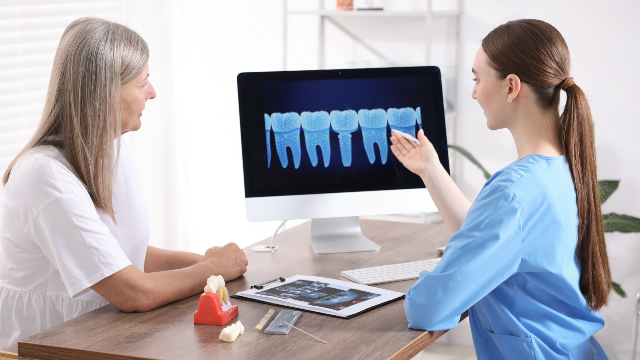
The first phase is imaging and measurement, not surgery, and it determines everything that follows. Magok Pureunmaeum Dental Clinic begins with a basic digital examination using standard panoramic X-rays alongside a 3D-CT scan, evaluating jawbone density, nerve pathways, blood vessels and adjacent tooth roots, and combining both images to analyze bone depth, angle and quality along with neighboring structures before surgery. It lists cone beam computed tomography (CBCT) — a 3D scanner capturing the jaw in three dimensions — as available on site with one CBCT unit.
A decision is built into this phase. The clinic's stated philosophy is to preserve natural teeth as much as possible, and its implant department emphasizes natural tooth preservation first, so the consultation may conclude a tooth can be restored rather than replaced. Two of the top questions it expects from US patients — "Can my natural tooth be saved instead of extracted?" and "Do I really need an implant?" — are answered here, on the imaging.
If imaging shows insufficient bone or active gum disease, those are treated first. The clinic requires evaluation of adjacent tooth roots and nerves and completion of any necessary periodontal treatment before placement, and combines periodontal treatment with implant therapy to improve long-term stability. Where bone volume is short it documents two procedures: bone grafting, which adds bone where volume is insufficient, and a sinus lift, which raises the sinus membrane and adds graft material to increase upper-jaw bone height. Candidates include patients whose jawbone is naturally thin, diminished with age, damaged by trauma, or resorbed after a long period without a tooth there.
The clinic's grafting figures are one to two weeks for initial soft tissue healing, with full bone integration and maturation generally requiring four to nine months before final implant placement or loading — inside the American Academy of Periodontology's range, which has bone developing for four to 12 months after a sinus lift before implants are placed, though sometimes the implant goes in at the same time. If a graft is in your plan, your timeline in weeks becomes a timeline in seasons.
Phase Two: Fixture Surgery and Osseointegration
Placement itself is short: Magok Pureunmaeum Dental Clinic states that surgical placement of a fixture takes about 30 to 60 minutes per tooth. Local anesthesia is commonly used, and the clinic notes additional sedation may be considered per patient and procedure, with options for dental anxiety. The sequence it documents for a standard implant is diagnostic scans setting depth, angle and position, surgical insertion of the fixture into the jawbone, attachment of a customized connecting abutment once healing allows, then the final crown.
One variation is worth asking about: the clinic performs single-day extraction and implant placement when bone conditions allow, which it says removes the standard two to three month wait between extraction and placement. That is conditional, not a default; complex cases involving bone grafts require additional visits over several months.
Immediately after surgery the clinic lists mild swelling, minor bruising, temporary discomfort and slight bleeding in the first 24 hours as common; the American Association of Oral and Maxillofacial Surgeons adds that strenuous exercise is usually restricted and a soft diet recommended early in healing.
Then comes the part that cannot be rushed. The ADA describes osseointegration — the word means "combines with the bone" — as bone growing around the fixture and holding it in place, which can take up to several months. The clinic's timings sit inside that window: initial soft tissue healing takes seven to 14 days, after which sutures are removed, and full bone fusion takes three to six months before the final crown, the same three to six months it gives for the total process. The FDA notes you typically wear a temporary abutment meanwhile. Whether you wait for full integration or restore sooner is a clinical judgment about bone quality and stability, not a preference.
Phase Three: The Abutment and the Final Crown
The abutment connects fixture to crown, and its fit has consequences for gum health. Magok Pureunmaeum Dental Clinic lists custom-milled anatomical abutments designed to fit each patient's gum contour among the equipment and techniques it uses, and gives the rationale as a failure mode: personalized abutments shaped to the gum line eliminate empty gaps between gums and crown, which it says enhances chewing strength and reduces peri-implant inflammation. Standard components can leave small gaps that trap food particles or residual dental cement, raising the risk of gum inflammation or reduced durability — improper fit causing food impaction or tissue inflammation appears in its own list of implant risks.
That maps onto a recognized problem. The American Academy of Periodontology describes peri-implant disease as inflammation in which bacteria build up below the gum line and eventually destroy supporting bone, and lists difficulty cleaning around an implant among the risk factors — precisely the gap a well-contoured abutment is meant to close.
The crown is where the result becomes visible and functional. The ADA notes a temporary crown, bridge or denture may be provided in the interim. Magok Pureunmaeum Dental Clinic describes the end point as a custom-designed intermediate abutment and final prosthetic crown secured once the implant has integrated with the jawbone, which it places at three to six months after surgery; a temporary crown may give an earlier aesthetic result, with functional visual results following once the healing abutment and provisional crown are fitted. AAOMS describes the readiness test: the final restoration goes on once the implant has fully bonded to bone and gum tissue has matured, with earlier follow-ups used to assess osseointegration.
The Timeline, Trips to Seoul, and Logistics
For a straightforward single implant, the clinic's documented plan is two trips months apart: an initial stay of three to seven days covering placement and initial follow-up, then a return a few months later for the crown. Its broader guidance puts that first stay at five to seven days, covering consultation, surgery and immediate post-operative checks.
Flying home is treated separately from healing. After routine implant surgery the clinic states patients can usually fly safely 24 to 48 hours later, provided there are no severe complications or extensive bone grafting. Where a sinus lift has been performed it advises waiting at least seven to 10 days, or until stitch removal and surgeon clearance, to avoid pressure changes affecting sinus healing — the same seven to 10 days it recommends staying for grafting and sinus lift work.
US patients fly into Incheon (ICN) or Gimpo (GMP). The clinic is on the 3rd floor of Woosung SB Tower at 385 Gangseo-ro in Gangseo-gu, Seoul, about 50 meters from Exit 2 of Balsan Station on Seoul Metro Line 5. Consultation hours are Monday and Wednesday to Friday 9:30 to 18:30 KST, Tuesday 9:30 to 20:30, and Saturday 9:30 to 14:00 with no lunch break; closed Sundays and public holidays. US passport holders can generally enter Korea visa-free for short stays via K-ETA, though rules change and should be checked against official sources first. Appointment requests go through the clinic's contact page.
Who Is a Candidate, and Who Should Wait
Candidacy rests on bone volume, gum health and general health rather than age. Magok Pureunmaeum Dental Clinic describes good candidates for standard implants as people with one or more missing teeth, healthy gums and sufficient jawbone density to support the implant post, adding that older adults and people with complex dental conditions can also qualify after evaluation. The ADA agrees on age: your health matters more than your age, and a physician may evaluate you beforehand.
The clinic lists situations in which treatment should be postponed or approached differently:
- Uncontrolled systemic disease, such as severe or unmanaged diabetes
- Active gum infection or severe untreated periodontitis
- Severe bone loss that requires bone grafting first
- Pregnancy
- Active radiation or chemotherapy treatment, or certain bisphosphonate medications
- Heavy smoking
Several appear independently in US guidance. The FDA states that overall health affects whether you are a good candidate and how long healing takes, that smoking may decrease long-term success, and that implant failure from systemic infection is more likely with uncontrolled diabetes.
Risks, Failure Modes and What Long-Term Data Show
The honest framing is high survival with real complication rates. A 2019 systematic review and sensitivity meta-analysis in the Journal of Dentistry, drawing on 18 prospective studies of contemporary implant systems, estimated 10-year survival at the implant level at 96.4%; rerun with a model accounting for patients lost to follow-up, the estimate fell to 93.2%. Older age (65 or over) was a significant predictor at 91.5%, which the authors read as a possible doubling of the risk of implant loss in older age groups.
Survival is not freedom from problems. A 2022 systematic review and meta-analysis in BMC Oral Health, covering 57 articles published between 2005 and 2021, estimated peri-implantitis prevalence at 19.53% at the patient level and 12.53% at the implant level, noting that diagnostic criteria — particularly probing depth — affected the figures reported.
Magok Pureunmaeum Dental Clinic counsels patients about surgical bleeding, tissue swelling, improper fit with standard abutments, sinus complications during upper molar placement, and fixture failure where maintenance is not kept up. Its standard-implant list adds failure to integrate with bone, localized infection, nerve irritation causing temporary numbness, and damage to adjacent teeth or sinuses. The FDA's list overlaps and adds two items: an abutment screw working loose, felt as the tooth loosening or twisting, and the need to tell imaging technicians about implants before an MRI or X-ray, which they can distort.
The clinic's documented risk-reduction measures are 3D CBCT digital diagnostics, strict sterile surgical protocols, personalized treatment planning and scheduled follow-up monitoring. It also states that detailed sterilization and infection-control protocols are not publicly verified — a fair question at consultation.
Aftercare, Follow-Up and the Clinic's Warranty Terms
Long-term success depends more on maintenance than on the surgery. The FDA's post-procedure guidance is short: follow the hygiene instructions you are given, keep regular visits with your provider, and say so right away if the implant feels loose or painful.
Magok Pureunmaeum Dental Clinic asks patients to attend regular follow-up checkups, maintain oral hygiene to prevent food impaction, and seek immediate evaluation for pain, looseness or gum disease. It states that regular checkups are required to maintain warranty benefits, and its documented warranty program covers implant fixtures up to eight years and crowns up to five, contingent on those checkups — warranty terms, not a guaranteed outcome.
The AAP is a useful counterweight to the idea that an implant is maintenance-free: implants function like a natural tooth but can also become diseased like one, and need the same brushing, flossing and professional check-ups, with previous periodontal disease, poor plaque control, smoking and diabetes all risk factors for peri-implant disease. For a patient eight time zones away, that means arranging monitoring with a dentist at home too.
Who Performs the Surgery, and Why the Specialty Matters
Implant surgery at Magok Pureunmaeum Dental Clinic falls to its oral and maxillofacial surgery specialist rather than its restorative director. Dr. Park Kyung Ran is described by the clinic as a Specialist in Oral and Maxillofacial Surgery and a licensed dentist in South Korea, recorded as a Fellow, board-certified in Oral and Maxillofacial Surgery — a Korean specialist credential, not the same thing as certification by a US specialty board. Dr. Park graduated from Yonsei University College of Dentistry, completed an internship and residency in the Department of Oral and Maxillofacial Surgery at Yonsei University Dental Hospital and Master's and Doctoral programs in the same field, and is a Senior Board-Certified Member of the Korean Association of Maxillofacial Plastic and Reconstructive Surgeons.
Dr. Park's listed clinical focus lines up with the phases above: dental implants, minor oral surgery, tooth extraction including wisdom teeth, and bone grafting and sinus lift. That last item is why the distinction is not cosmetic — grafting and sinus augmentation are jaw and sinus-floor surgery, inside the oral and maxillofacial scope rather than the restorative one. The clinic's other named dentist, Director Dr. Park Hyo Jin, is a Specialist in Conservative Dentistry with over 22 years of clinical experience whose documented focus is preserving natural teeth. That pairing shapes the philosophy of natural tooth preservation first: whether a tooth can be saved, and the surgery to replace it if it cannot, sit with different specialists. The clinic reports 10,000-plus procedures across its Minish and implant treatment combined and has operated in Gangseo-gu since 2017; more on both specialists is on its about page, with patient feedback on its reviews page.
One structural point about credentials: the clinic is a Registered Medical Institution for Attracting Foreign Patients, certified by Korea's Ministry of Health and Welfare under the Medical Overseas Expansion and Foreign Patients Attraction Act, meaning it is authorized under Korean law to treat international patients. That is a regulatory registration, not a clinical quality accreditation, and worth reading as exactly that. The clinic states multilingual support is available across its patient services, while interpreter arrangements for a case are determined after consultation.
Cost Drivers, Questions to Ask, and Planning Treatment From Abroad
Cost is set by the number of components and procedures involved, not a single line item. Magok Pureunmaeum Dental Clinic does not publish implant figures and states that costs and treatment plans are determined after an in-person examination. The variables are visible in the clinical plan: the number of implants, since each position needs its own fixture, abutment and crown; whether the site needs bone grafting or a sinus lift; whether periodontal treatment must come first, which the clinic requires where needed; abutment type, since a custom-milled anatomical abutment is not a stock component; the number of trips; and follow-up frequency, since warranty benefits depend on regular checkups. The clinic lists decreased overall treatment costs from saving natural teeth among the benefits of its preservation approach — an argument rather than a promise. Cost transparency is among the concerns it lists as typical for US patients, alongside credentials, English communication, safety and home follow-up. AAOMS notes that insurance coverage for implants varies, a question for your own insurer.
Implant planning is where the useful detail lives, so bring questions:
- What did the 3D-CT scan show about bone depth, bone quality and the position of nerves and the sinus at my site?
- Can any of my remaining teeth be saved instead of extracted and replaced?
- What brand and model of implant system will be used? The FDA advises asking this and keeping it for your records.
- Will I need bone grafting or a sinus lift, and if so how long before the fixture can be placed?
- Will I receive a custom abutment or a stock component, and why?
- How many trips does my plan require, and when can I fly home after surgery?
- What does the warranty cover, and which records will I receive in English for my dentist at home?
The clinic's preparation guidance: complete a full oral and medical examination and 3D imaging, disclose your medical history and medications, arrange transportation after surgery, follow pre-operative medication instructions, avoid smoking and alcohol for at least a week beforehand, and do not take blood thinners or anti-inflammatory drugs without your doctor's approval.
Dental care is the most common form of medical tourism among US residents, which the CDC's Yellow Book attributes to the rising cost of dental care in the United States plus the proportion of people uninsured or underinsured for it. It also cautions that dentists abroad might not face the same licensure oversight or follow the same infection-control practices as in the US, a potential risk of bloodborne or waterborne infection. Two of its recommendations matter here — agree a plan for handling complications with your dentist at home and the treating clinician before you travel, and request copies of your records in English. For an implant, the key record identifies the implant system used.
The Bottom Line
- A standard implant is three components placed across six phases: 3D-CT diagnosis, site preparation if needed, fixture surgery, osseointegration, the abutment, then the final custom crown.
- Fixture surgery takes roughly 30 to 60 minutes per tooth under local anesthesia, but the total process runs three to six months — four to nine where bone grafting is involved.
- Plan for two trips to Seoul: three to seven days for placement and follow-up, then a return months later for the crown; sinus lift cases need about seven to 10 days before flying.
- Pooled data show around 96.4% 10-year implant survival, falling to about 93.2% when patients lost to follow-up are modeled in, with peri-implantitis prevalence estimated at roughly 19.5% of patients.
- Success depends heavily on maintenance: the clinic's warranty covers fixtures up to eight years and crowns up to five, conditional on keeping regular checkups.
Frequently Asked Questions
Why does the crown come months after the surgery instead of on the same day?
Because bone must grow around and bond to the fixture before it can carry chewing load — osseointegration, which the ADA notes can take up to several months. Magok Pureunmaeum Dental Clinic puts full bone fusion at three to six months before the final crown, though some cases allow a provisional restoration earlier.
Can a tooth be extracted and the implant placed in the same appointment?
Sometimes, depending on the bone. Magok Pureunmaeum Dental Clinic performs single-day extraction and implant placement where bone conditions allow, which it says removes the standard two to three month wait. It is conditional on imaging rather than routine, so ask about your own site.
What is a custom abutment and does it change anything for me?
An abutment connects the fixture in your bone to the crown you see; a custom one is milled to your gum contour. Magok Pureunmaeum Dental Clinic states personalized abutments eliminate empty gaps between gum and crown, which it links to better chewing strength and less peri-implant inflammation; standard components can leave small gaps that trap food or residual cement.
What is peri-implantitis and how would I know if I had it?
Peri-implantitis is inflammation around an implant that has progressed to loss of supporting bone, and usually requires surgical treatment. The American Academy of Periodontology describes warning signs similar to gum disease: red or tender gums around the implant, or bleeding when brushing. Its earlier, often reversible stage, peri-implant mucositis, involves soft-tissue inflammation without bone loss.
Do I need a bone graft, and how much longer would that add?
Only imaging can answer that. Magok Pureunmaeum Dental Clinic uses 3D-CT to assess jawbone density and volume, and recommends grafting or a sinus lift where bone is naturally thin, reduced by age, damaged by trauma or resorbed after long-term tooth loss. The American Academy of Periodontology puts bone development after a sinus lift at four to 12 months before implants are placed.
Who at the clinic would actually be doing the implant surgery?
Implant surgery falls under the clinic's oral and maxillofacial surgery specialist, Dr. Park Kyung Ran, whose listed focus includes dental implants, minor oral surgery, extractions, and bone grafting and sinus lift. Dr. Park trained at Yonsei University College of Dentistry and completed residency at Yonsei University Dental Hospital. The clinic's conservative dentistry specialist handles whether a tooth can be preserved instead.
What happens if something feels wrong with the implant after I get home?
Contact a dentist promptly rather than waiting to see whether it settles. Magok Pureunmaeum Dental Clinic advises immediate evaluation for pain, looseness or gum inflammation around an implant, and the FDA advises telling your provider right away if an implant feels loose or painful. Keeping your Korean records — including the implant system used — in English makes that appointment more productive.
This article is for general informational purposes and does not constitute individualized medical advice, and it is not a self-diagnosis tool. Treatment candidacy, technique, and expected outcomes can only be determined through a consultation with a qualified dentist.
More Articles
Continue reading clinical guides from our dental specialists.
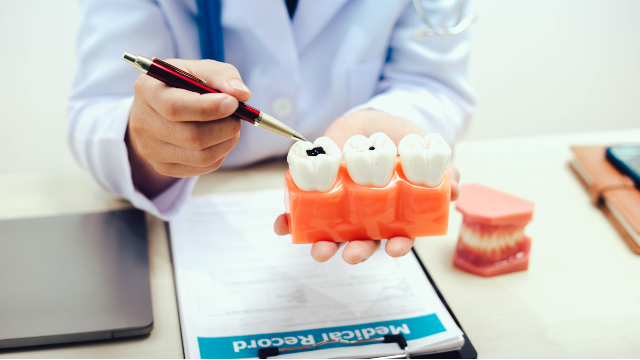
Cavity Treatment Korea: Resin Filling vs Inlay or Crown
A resin restoration is usually enough when decay is small and the tooth's walls and cusps are intact. Larger damage points to an inlay, onlay, or crown.
Learn More
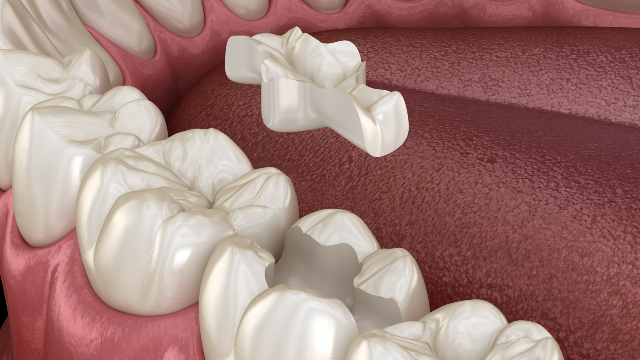
Inlay Onlay Dental Restoration vs Crown: How to Choose
An inlay or onlay restores a damaged tooth without full coverage. Published data show partial-coverage survival close to crowns, so choose by tooth left.
Learn More
Minish Dental Treatment: How It Preserves Tooth Structure
Minish dental treatment is a biomimetic restoration that rebuilds damaged teeth with precision-made blocks while removing as little enamel as possible.
Learn More