Natural Tooth Preservation & Certified MINISH Dental Care in Magok, Seoul

Dental Guide
Teeth Whitening in Korea: Process, Results, Aftercare
Professional teeth whitening in Korea lightens natural teeth with a supervised peroxide gel. Here is the process, the evidence on results, and aftercare.
Schedule a ConsultationWhat Does Teeth Whitening at a Korean Dental Clinic Involve?
Medically reviewed by Dr. Park Hyo Jin, Specialist in Conservative Dentistry / Director
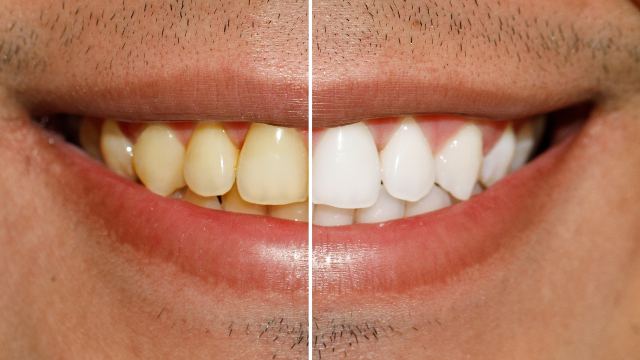
Professional teeth whitening at a dental clinic in Korea follows the same clinical logic it follows anywhere: an examination first, a peroxide-based gel applied to protected teeth under supervision, then a shade assessment at the end. What varies between clinics is how carefully candidacy is screened, how sensitivity is managed, and how honestly the likely result is described in advance. Whitening is elective and cosmetic. It lightens natural tooth structure, it does not change the color of crowns or fillings, and it is not permanent — which makes the aftercare conversation as important as the appointment itself.
What Professional Teeth Whitening Actually Does
Whitening changes tooth color through a chemical reaction, not by scrubbing. According to the American Dental Association, whitening products contain one of two bleaches — hydrogen peroxide or carbamide peroxide — which break stain compounds into smaller pieces so the color is less concentrated and the tooth appears brighter. Carbamide peroxide releases roughly one-third of its content as hydrogen peroxide, the active oxidizing agent. Hydrogen peroxide diffuses readily through the spaces in enamel, and the ADA notes it can pass from enamel and dentin into the pulp — the nerve tissue inside the tooth — within about 15 minutes of exposure. That single fact explains most of what follows about sensitivity.
Dentists divide discoloration into two categories, and they respond differently:
- Extrinsic stains sit on the outside of the enamel, from pigmented foods and drinks, tobacco, metal salts, and poor oral hygiene. Many can be reduced mechanically — by brushing, professional cleaning, or in some cases enamel microabrasion.
- Intrinsic stains sit inside the enamel or the underlying dentin. Causes include aging, fluorosis, certain childhood antibiotic exposure such as tetracycline, trauma, and changes in the pulp. Reducing these requires a chemical reaction, which is what bleaching provides.
One limitation is absolute. Only natural tooth structure responds to a bleaching agent. Crowns, veneers, tooth-colored fillings, and implant restorations do not change color, a point the clinic's own treatment documentation makes explicitly.
The Whitening Process, Step by Step
An in-office whitening appointment is a defined sequence rather than a single application. The steps documented by Magok Pureunmaeum Dental Clinic are:
- Dental examination and shade assessment. The starting shade is recorded, and the teeth and gums are checked.
- Cleaning or preparation as needed. Plaque and surface staining are addressed first when present.
- Protection of the gums and surrounding soft tissue. A barrier is placed so the gel stays on the teeth.
- Application of a professional whitening agent to the tooth surfaces.
- Activation, or a set dwell time, according to the whitening system selected.
- Rinsing and a final shade assessment.
Beforehand, the clinic documents a consultation in which the dentist evaluates the type and severity of the discoloration and considers existing restorations and any active oral conditions.
On timing, the clinic's procedure documentation puts an in-office whitening appointment at approximately 30 to 90 minutes depending on the system and protocol, and its patient-facing guidance describes allowing roughly one to two hours for the visit overall. Some patients may need additional sessions or maintenance treatment. Local anesthesia is generally not required, and there is a clinical reason to prefer it that way: the ADA cites guidance that anesthesia be avoided during in-office bleaching so you can detect any burning sensation — which may signal gel has seeped past the protective barrier — and alert the dentist immediately.
The clinic also documents a dentist-supervised take-home route, using professionally dispensed trays over roughly two to six weeks. For context, the ADA describes at-home professional gels typically ranging from 10% to 38% carbamide peroxide, with daily wear times from 2 to 10 hours across treatment periods of 6 to 28 days.
One point of honesty about equipment: the specific whitening agent, concentration, brand, and any lamp or activation device used at this clinic are not documented in its information for this market, and no regulatory clearance or approval is claimed here for any product or device. Ask at consultation.
Who Is a Candidate, and What Needs Treating First
Good candidates are adults with healthy teeth and gums who want to reduce discoloration of their natural teeth. The clinic's documented candidate profile covers extrinsic staining and suitable intrinsic discoloration, with an examination first to determine whether whitening is appropriate at all.
Several situations call for treating something else first, or for choosing a different approach:
- Untreated cavities. Decay is addressed first.
- Active gum disease. Periodontal inflammation should be brought under control before cosmetic treatment.
- Significant existing tooth sensitivity. Whitening may need to be modified, postponed, or reconsidered.
- Other active oral problems or infection. These are assessed and managed first.
- Extensive restorations in the visible teeth. Because restorations will not lighten, the sequence and the realistic endpoint both change.
- Pregnancy or breastfeeding. The clinic's documentation advises discussing whitening with your dentist before treatment.
Age matters too. The ADA notes that the American Academy of Pediatric Dentistry discourages full-arch cosmetic bleaching for children and adolescents in the primary and mixed dentition — that is, while baby teeth are still present.
The examination serves a second purpose beyond safety: it establishes what is causing your discoloration, the main determinant of how much lightening is realistically available. A cleaning may be recommended first when plaque or surface staining is present, and that step alone sometimes changes the appearance more than patients expect.
What the Published Evidence Says About Realistic Results
Whitening works, but the size of the change is not something any clinic can promise in advance. MouthHealthy, the ADA's patient resource, is unusually direct about this: yellow teeth will probably bleach well, brown teeth may not respond as well, and teeth with gray tones may not bleach at all. Discoloration caused by medications or by a tooth injury may not respond either.
The systematic evidence supports effectiveness while being candid about its limits. A 2018 Cochrane review of home-based chemically induced whitening pooled 71 trials involving 3,780 adults. It found that bleaching agents whitened teeth compared with placebo over short periods — from 2 weeks to 6 months — but rated the certainty of that evidence as low to very low, largely because most comparisons came from single small trials with unclear risk of bias. The same review concluded the evidence was insufficient to establish the superiority of any particular composition, concentration, application method, application time, or treatment duration.
A few further findings help set expectations:
- A systematic review and meta-analysis in Operative Dentistry comparing at-home with in-office bleaching found no overall difference between the two, either in the risk and intensity of tooth sensitivity or in effectiveness.
- Speed does differ. The ADA cites a comparison in which an over-the-counter technique took 16 days to reach the whitening level achieved by a seven-day at-home tray system and a single-day in-office procedure.
- Some stains are simply slow. For tetracycline staining, the ADA notes treatment can require three to four months of nightly application on average.
There is also a short-term optical effect. The clinic documents that teeth may look lighter immediately after professional whitening, with the true final shade becoming clearer once temporary dehydration of the enamel resolves. The shade you see leaving the chair is not the shade you will settle at.
How Long the Result Lasts
Whitening is a cosmetic change that fades, and the published follow-up data is reasonably consistent on the timescale. A 2023 systematic review in Clinical Oral Investigations examining the prognosis of at-home bleaching with low-concentration products reviewed 24 studies and reported that most authors found color remaining stable between one and 2.5 years, regardless of the bleaching agent or the form of administration. The same review noted that severe discolorations show a higher degree of recurrence — the darker the starting point, the more likely the drift back.
Longer-term trial data exists as well. A two-year double-blind randomized clinical trial in the American Journal of Dentistry followed 60 participants randomized to in-office bleaching with 35% hydrogen peroxide or at-home bleaching with 16% carbamide peroxide, recording color on the Vita Classical shade guide from baseline out to two years.
The clinic's own documentation aligns with this. Whitening is described as cosmetic rather than permanent, with longevity varying between individuals according to diet, oral hygiene, smoking, and the natural characteristics of the teeth, and with treatment sometimes needing to be repeated periodically. Practically, a whitening result is a maintained state rather than a finished one. Heavy coffee, tea, red wine, and tobacco exposure will shorten it, as will letting surface staining accumulate between cleanings.
Sensitivity: How Common It Is, and How It Is Managed
Temporary tooth sensitivity is the most common side effect of whitening, and common enough that you should plan for the possibility. The ADA reports that transient mild to moderate tooth sensitivity can occur in up to two-thirds of users during the early stages of bleaching. The risk applies to all forms of bleaching, possibly reflecting inflammation of the pulp from peroxide exposure. With strip or tray-based regimens, the ADA notes sensitivity may develop within two to three days of starting and usually resolves by the fourth day after treatment ends.
Gum irritation is the second common effect, usually resulting from contact with peroxide gel because of a poorly fitting tray or an incompletely placed protective barrier. The 2018 Cochrane review reached the same overall conclusion: tooth sensitivity and oral irritation were the most common adverse events, more prevalent at higher concentrations of the active agent, and mild and transient.
Several factors are within a dentist's control:
- Concentration. The ADA cites a systematic review finding that lower concentrations of hydrogen peroxide produced less tooth sensitivity and greater objective color change.
- Light activation. A systematic review and meta-analysis of in-office vital bleaching, indexed by the UK Centre for Reviews and Dissemination, found light activation raised the odds of tooth sensitivity substantially — an odds ratio of 3.53, with a 95% confidence interval of 1.37 to 9.10 — while showing no bleaching benefit at high hydrogen peroxide concentrations of 25% to 35%. The authors recommended caution with light-activated systems, and the assessing reviewers noted the sensitivity finding rested on only three small trials.
- Desensitizing measures. Studied approaches include pretreatment application of 5% potassium nitrate with 2% sodium fluoride gel, and pretreatment use of nonsteroidal anti-inflammatory drugs. The ADA is clear that further research is needed to confirm how well these work.
- Protocol adjustment. The clinic documents that sensitivity-management measures or adjustments to the whitening protocol may be recommended where appropriate.
Tell the dentist at consultation if you already have sensitive teeth, receding gums, exposed root surfaces, or a history of discomfort after dental work.
Aftercare That Protects the Result
Aftercare for whitening is undramatic, and it matters more than the appointment. The clinic's documented protocol is to follow the dentist's specific instructions, maintain good oral hygiene, limit strongly staining foods and beverages, avoid smoking, and follow any recommended sensitivity-management measures. In practice, that translates to:
- Treat the first day or two as the period when enamel is most receptive to new pigment, and keep deeply colored food and drink to a minimum.
- Limit the routine offenders longer term — coffee, tea, red wine, and cola drinks all carry the pigments that cause extrinsic staining.
- Avoid smoking and smokeless tobacco. Tar is naturally dark, and nicotine turns yellow on contact with oxygen.
- Keep brushing and interdental cleaning consistent, and keep recommended checkups and cleanings.
- Do not stack products. The ADA warns that overuse of whiteners can damage tooth enamel or gums.
- Contact the dentist if pain, marked gum irritation, or swelling persists rather than settling.
It is also worth naming what does not work. The ADA's review of do-it-yourself methods reported that a charcoal and table salt mixture was abrasive and ineffective, and found insufficient evidence that charcoal-based products whiten vital teeth safely and effectively.
Sequencing Whitening With Fillings, Crowns, and Veneers
If you have restorations in the visible teeth, sequence is a clinical decision rather than a scheduling detail. Because whitening affects natural teeth but not restorations, the clinic documents that the treatment sequence should be planned carefully when veneers, crowns, or fillings are present. Whiten first and an older composite filling may suddenly read as darker than the tooth around it. Match a new restoration to an unwhitened tooth and it will be wrong if you whiten later.
There is a bonding consideration too. The ADA notes research suggesting bleaching protocols may alter the surface roughness of enamel and may reduce the shear bond strength between enamel and composite or ceramic restorative materials. That is one reason dentists commonly allow an interval between whitening and adhesive restorative work — worth raising if you are planning both in one trip.
Whitening is also not the answer to every appearance concern. The clinic documents alternatives for different problems: composite bonding, veneers, tooth-colored fillings, and restorative treatment where the issue is shape, damage, or spacing rather than color. Whitening may be combined with a routine dental cleaning or other cosmetic treatment when clinically appropriate. This clinic does not provide orthodontics or dentures.
The Dentist and the Clinic Behind the Treatment
Whitening is a low-invasiveness procedure, which is exactly why the screening judgment behind it carries the weight. At Magok Pureunmaeum Dental Clinic, aesthetic dentistry sits with the Director:
- Dr. Park Hyo Jin is a licensed dentist in South Korea and a board-recognized specialist in Conservative Dentistry, the discipline concerned with preserving natural teeth through restorative care.
- Dr. Park holds a Master's Degree in Dentistry from Wonkwang University Graduate School.
- Dr. Park completed an internship and residency in Conservative Dentistry.
- Dr. Park has over 22 years of clinical experience.
- Dr. Park's documented core specializations include esthetic dentistry and restorative dentistry.
- Dr. Park is a full member of the Korean Academy of Esthetic Dentistry, the Korean Academy of Conservative Dentistry, and the Korean Academy of Endodontics.
These are Korean specialist qualifications and Korean society memberships. They are not equivalent to United States board certification and should not be read as such.
The clinic was established in 2017 and lists teeth whitening among the five procedures it is best known for in this market. Its stated philosophy is to preserve natural teeth as far as possible while addressing patients' aesthetic needs. You can read the clinic's own account of its background on its about-us page, and patient feedback is collected on its reviews page.
On regulatory status, the clinic is a Registered Medical Institution for Attracting Foreign Patients, certified by Korea's Ministry of Health and Welfare in compliance with the Medical Overseas Expansion and Foreign Patients Attraction Act. Its business registration number is 345-60-00227. That registration is a legal authorization to treat international patients, not an accreditation of clinical quality. It does carry one practical safeguard: registered institutions must hold medical malpractice liability insurance, and the Korea Health Industry Development Institute maintains searchable public lists through the government's Medical Korea portal.
The clinic is on the 3rd floor of Woosung SB Tower, 385 Gangseo-ro, Gangseo-gu, Seoul, about 50 meters from Exit 2 of Balsan Station on Seoul Metro Line 5. It is open Monday and Wednesday through Friday from 9:30 to 18:30 KST, Tuesday from 9:30 to 20:30, and Saturday from 9:30 to 14:00 with no lunch break, and is closed Sundays and public holidays.
Planning a Whitening Visit From the United States
Whitening is one of the easier procedures to fit into a trip, because it involves no surgery and no laboratory-made restoration. Most patients resume normal activities immediately after a routine session, and the clinic documents that temporary sensitivity or gum irritation generally settles once treatment is complete.
No cost figure belongs in an article. The clinic's price range is not published, and any number quoted before an examination is guesswork. What you can usefully understand in advance are the drivers:
- Which method is used — in-office application, dentist-supervised take-home trays, or a combination.
- How many sessions or how long a tray course your discoloration realistically needs.
- Whether a cleaning or other preparatory treatment is required first.
- Whether existing restorations in the visible teeth will need replacing afterward to match a new shade.
Ask for the treatment plan and its itemized basis in writing after the examination, rather than asking for a price before one.
On logistics, US travelers generally fly into Incheon (ICN) or Gimpo (GMP), and the clinic is reachable by Seoul Metro Line 5 to Balsan Station. US passport holders can typically enter Korea visa-free for short stays via K-ETA; confirm current entry rules before booking. On language, the clinic states that translated documents are available and that multilingual support is available across patient services, with no language limitations. The specific arrangement for interpreter support is described as determined after consultation, so confirm it when you book.
Questions worth bringing to the consultation:
- What is causing my discoloration, and how much of it is realistically treatable by bleaching?
- Which whitening method do you recommend for my case, and why that one?
- What agent and concentration will be used, and will any activation device be involved?
- How will sensitivity be managed, given my history?
- Do any of my existing restorations need addressing before or after whitening?
- Who should I contact if sensitivity persists after I return home?
You can start that conversation through the clinic's consultation contact page before you book travel.
The Bottom Line
- Professional whitening lightens natural tooth structure with a supervised peroxide gel; it does not change the color of crowns, veneers, fillings, or implant restorations.
- How much lightening is available depends mainly on the cause of the discoloration — the ADA notes yellow teeth usually bleach well, brown teeth less so, and gray-toned teeth may not bleach at all. No specific shade should be promised.
- The 2018 Cochrane review found whitening effective against placebo over 2 weeks to 6 months, but rated the certainty of evidence low to very low and found no basis for declaring any concentration or method superior.
- Published follow-up suggests color commonly stays stable for about one to 2.5 years, with more severe discoloration relapsing sooner; whitening is a maintained result, not a permanent one.
- Temporary sensitivity affects up to two-thirds of users early on and is usually mild; lower peroxide concentrations, careful gum protection, and desensitizing measures are the practical levers.
Frequently Asked Questions
Will whitening get my teeth to the shade I have seen in photos online?
No one can commit to a specific shade before an examination. The achievable change depends on your starting color, the type of discoloration, the condition of your enamel, and your individual response — and the ADA notes gray-toned teeth may not bleach at all. Ask your dentist to record your starting shade and describe a realistic range rather than a target.
Does whitening damage tooth enamel?
Used as directed and under professional supervision, peroxide whitening is not considered damaging, and a 2022 systematic review cited by the ADA concluded that hydrogen peroxide whitening products do not appear to have carcinogenic effects on the oral mucosa. The ADA does warn that overuse of whiteners can damage enamel or gums, which is the main argument for supervision rather than self-escalation.
Can I whiten teeth that have white spots or fluorosis marks?
Sometimes, but the mechanism differs from what patients expect. The ADA notes that brown stains from fluorosis or tetracycline may respond better to bleaching than white spots, and that white spots from fluorosis or previous orthodontic treatment tend to become less noticeable as the surrounding tooth lightens rather than disappearing. For defects limited to the enamel surface, microabrasion is a separate technique your dentist may raise.
Is a whitening lamp necessary for a better result?
The evidence does not support treating light activation as a requirement. A systematic review and meta-analysis of in-office vital bleaching found light activation increased the odds of tooth sensitivity roughly threefold and did not improve the outcome at high hydrogen peroxide concentrations of 25% to 35%. If a lamp is proposed, it is fair to ask what it is expected to add.
Can I have whitening while pregnant or breastfeeding?
The clinic's documentation advises that pregnant or breastfeeding patients discuss whitening with their dentist before treatment. Because whitening is entirely elective and cosmetic, deferring it carries no clinical downside, and many patients choose to. Raise it at the consultation so timing can be planned rather than assumed.
What should I do if sensitivity is still bothering me after I fly home?
Contact the treating clinic first, since they know the agent, concentration, and protocol used — and confirm before you travel how they handle follow-up questions from abroad. Sensitivity from whitening is usually mild and self-limiting, but discomfort that persists or worsens deserves an in-person examination, and a dentist where you live can assess an acute problem. Note when the sensitivity started and what triggers it.
This article is for general informational purposes and does not constitute individualized medical advice, and it is not a self-diagnosis tool. Treatment candidacy, technique, and expected outcomes can only be determined through a consultation with a qualified dentist.
More Articles
Continue reading clinical guides from our dental specialists.

Cavity Treatment Korea: Resin Filling vs Inlay or Crown
A resin restoration is usually enough when decay is small and the tooth's walls and cusps are intact. Larger damage points to an inlay, onlay, or crown.
Learn More

Inlay Onlay Dental Restoration vs Crown: How to Choose
An inlay or onlay restores a damaged tooth without full coverage. Published data show partial-coverage survival close to crowns, so choose by tooth left.
Learn More

Minish Dental Treatment: How It Preserves Tooth Structure
Minish dental treatment is a biomimetic restoration that rebuilds damaged teeth with precision-made blocks while removing as little enamel as possible.
Learn More