Natural Tooth Preservation & Certified MINISH Dental Care in Magok, Seoul

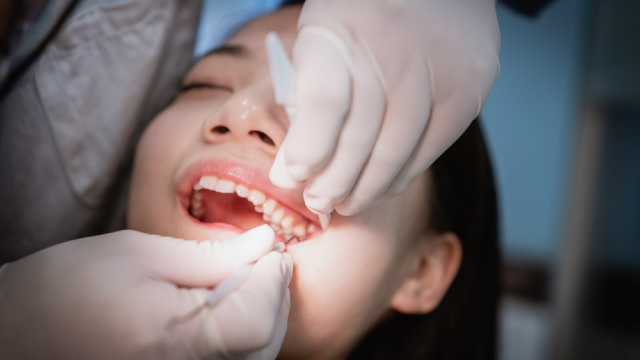
Dental Guide
Minish Dental Treatment: How It Preserves Tooth Structure
Minish dental treatment is a biomimetic restoration that rebuilds damaged teeth with precision-made blocks while removing as little enamel as possible.
Schedule a ConsultationWhat Is Minish Dental Treatment and How Does It Preserve Natural Tooth Structure?
Medically reviewed by Dr. Park Hyo Jin, Specialist in Conservative Dentistry / Director
Minish dental treatment is a minimally invasive tooth-restoration approach that rebuilds the shape, color, and function of a damaged tooth using a precision-manufactured restoration bonded directly to what remains of your natural tooth. The defining idea is subtraction avoidance: instead of grinding a tooth down to a stump to make room for a covering, the restoration is designed to fit around the healthy structure that is already there. That places it inside the broader field of biomimetic dentistry, a philosophy that treats natural enamel and dentin as materials worth conserving rather than replacing. This article explains how the system works step by step, who it suits, and what the credential "Certified Minish Provider" actually signifies.
What Minish Dental Treatment Actually Is
Minish is a restorative system, not a single product or a cosmetic package. According to the treatment information held by Magok Pureunmaeum Dental Clinic, MINISH is a minimally invasive tooth-restoration approach that aims to restore the function and aesthetics of damaged teeth using restoration materials designed to resemble the properties of natural teeth. The restoration itself is precision-manufactured and then adhesively bonded to the affected tooth — meaning it is chemically and mechanically joined to the tooth surface rather than cemented over a heavily reduced core.
The clinic describes the restoration component as a Minish Block: a custom piece engineered so that its strength, translucency, and wear characteristics sit close to those of natural tooth tissue. The clinic frames the treatment as a tooth anti-aging restoration solution designed for overall dental health rather than purely cosmetic purposes, restoring damaged teeth to their natural shape, ratio, and color without unnecessary tooth reduction.
It helps to understand where this sits alongside options you may already know:
- A composite filling is tooth-colored material placed and hardened directly in the mouth, usually after decayed tissue is removed.
- A veneer covers only the front surface of a tooth, and the American Dental Association notes that placing one requires removing a small amount of enamel, which makes the treatment non-reversible.
- A crown covers the entire tooth, and is typically used when a tooth is badly broken down or when too little structure remains to hold a filling.
- A Minish restoration is positioned as a bonded, precision-fabricated restoration intended to sit between those categories, with minimal to zero tooth reduction as the design goal.
Why Preserving Natural Tooth Structure Matters
Preserving tooth structure matters because mature enamel does not grow back. The National Institute of Dental and Craniofacial Research explains that early enamel damage can be halted or even reversed while minerals are only beginning to be lost, using fluoride from toothpaste, water, or professional application. Once more minerals are lost than can be restored, the enamel breaks down and a cavity forms. At that point, the tissue removed by a dental drill is gone permanently.
This is why the international dental profession has moved toward conservation as a default. The FDI World Dental Federation, the global federation of national dental associations, adopted a policy statement on Minimal Intervention Dentistry that states the aim plainly: to maintain as much healthy tooth structure as possible and keep teeth functional for life. Its stated principles include limiting operative intervention to removal of friable enamel and soft dentine, and repairing rather than replacing defective restorations wherever the evidence supports it.
The NIDCR also notes something patients rarely hear stated directly: dental fillings and crowns generally do not last a lifetime and may need replacing. Every replacement cycle tends to take a little more tooth with it. Conserving structure at the first restoration therefore affects what options remain available to you a decade or two later.
What a Certified Minish Provider Is, and Why It Matters Here
At Magok Pureunmaeum Dental Clinic, Minish treatment is anchored on a specific, named credential rather than a general interest in cosmetic dentistry. Dr. Park Hyo Jin, the clinic's Director, is a Certified Minish Provider. Dr. Park is also a full member of the Minish Biomimetic Dentistry Society. Those two facts are worth separating from general marketing language, because they describe formal association with the system rather than a claim of proficiency made by the clinic about itself.
The rest of Dr. Park's documented background is relevant to how a Minish case gets planned:
- Dr. Park is a licensed dentist in South Korea and a board-recognized specialist in Conservative Dentistry — the discipline concerned with preserving natural teeth through restorative treatment.
- Dr. Park holds a Master's Degree in Dentistry from Wonkwang University Graduate School.
- Dr. Park completed an internship and residency in Conservative Dentistry, with that residency training documented at Wonkwang University Dental Hospital.
- Dr. Park has over 22 years of clinical experience.
- Dr. Park is a full member of the Korean Academy of Conservative Dentistry, the Korean Academy of Endodontics, and the Korean Academy of Esthetic Dentistry.
- Dr. Park's documented core specializations include esthetic dentistry, restorative dentistry, root canal treatment, TMJ disorders, and Minish biomimetic restoration.
These are Korean specialist qualifications and Korean society memberships. They are not equivalent to United States board certification, and they should be read as what they are: a specialist track in the country where the dentist trained and practices.
The clinic's stated philosophy runs in the same direction. Its position is to preserve natural teeth as much as possible while addressing patients' aesthetic needs, with every treatment plan designed with the mindset of treating one's own family, and only treatments that are genuinely necessary being performed. Across Minish and implant work combined, the clinic reports more than 10,000 procedures.
The Minish Procedure, Step by Step
A Minish case follows a defined sequence rather than a single appointment of drilling and filling. The documented steps are:
- Examination and diagnosis. The dentist assesses the tooth, the amount of wear or damage, the existing shape and shade, and the surrounding gum condition.
- Digital 3D scan. The tooth and bite are captured digitally instead of, or alongside, a conventional impression.
- Tooth preparation. This is deliberately kept minimal — the clinic describes minimal to zero tooth reduction, preserving natural enamel.
- Digital design. The restoration is designed one-to-one for your specific tooth, targeting natural proportion, shape, and shade.
- Precision fabrication. The restoration is machined at the Minish Technology R&D Tooth Lab using precision milling.
- Fit and try-in. The restoration is checked against the tooth for fit and form before it is bonded.
- Adhesive bonding. The restoration is bonded directly to the tooth. The clinic states that the process avoids a temporary-tooth stage entirely.
- Occlusal check and adjustment. Your bite is tested and refined so the restored tooth meets its opposing teeth correctly.
On anesthesia, the honest answer is "it depends." Local anesthetic may be used depending on how much preparation is needed and where the tooth sits. Because the approach limits invasive grinding, the clinic reports that discomfort is usually minimal and that little or no local anesthesia is often required. It should not be described as guaranteed pain-free for every patient, and the Minish system's own philosophy is worded as avoiding overtreatment and unnecessary harm rather than promising a painless experience in all cases.
The Technology Behind a Minish Restoration
The Minish system is built around digital capture and machine fabrication rather than hand-layered material. Its described technology set includes 3D scanning, ultra-precision machining, the Minish Block itself, a Minish Robot for precision machining, and a Minish Photopolymerizer used for adhesive bonding and curing. A genuine-verification system exists so that a patient can confirm the restoration used was an authentic Minish Block supplied by Minish Technology Co., Ltd.
Two honest caveats belong here. First, that technology list describes the Minish system in general. It should not be assumed that every listed device is physically installed at any individual provider clinic unless that clinic confirms it. What is publicly documented at Magok Pureunmaeum Dental Clinic is a CBCT (Cone Beam CT) unit — a 3D imaging scanner that produces a volumetric view of teeth, roots, and bone — along with a digital diagnostic system. Second, no claim of United States regulatory clearance or approval is made here for any Minish device, because no such claim is documented.
The relevance of digital fabrication to structure preservation is straightforward. Precision-milled restorations can be designed to thinner, more exacting margins than hand-shaped ones, which reduces how much of the tooth has to be cut away to accommodate them. The published evidence on this class of bonded ceramic restoration is reasonably encouraging: a 2025 consensus statement from the SSRD, SEPES, and PROSEC conference on minimally invasive restorations reported short-term survival of ceramic partial coverage restorations at 93.7% for lithium disilicate and 89.3% for resin-matrix ceramics, with ceramic laminate veneers showing long-term survival between roughly 93.7% and 96.8% depending on material. Those figures describe the general category, not any single product, and individual results vary.
Who Is a Good Candidate, and Who Should Wait
Good candidates are people whose teeth are damaged but still have enough healthy structure left to build on. The clinic's documented candidate profile includes patients with chipped, worn, uneven, stained, misshapen, or slightly misaligned teeth, as well as small gaps, and people with more extensive decay who want a minimally invasive restoration that keeps natural tooth structure. Minish also has applications described for extensively damaged molars.
Several situations call for treating something else first, or for choosing a different restoration entirely:
- Untreated decay. Active decay is addressed before any restoration is bonded over it.
- Active periodontal disease. Gum disease needs to be brought under control first; placing restorations over unhealthy tissue can make existing problems worse.
- Significant infection or an untreatable root infection. These need endodontic assessment rather than a cosmetic solution.
- Insufficient remaining tooth structure or severe fracture. Where too little tooth remains, full-coverage restoration may be the appropriate choice.
- Uncontrolled grinding or clenching (bruxism). Severe, unmanaged bruxism should be addressed before restorative work.
That last point deserves more than a passing mention. A 2021 survey by the American Dental Association's Health Policy Institute found that more than 70% of dentists were seeing signs of grinding and clenching in their patients — a jump of nearly 10 percentage points over the previous year. The ADA notes that dentists often spot it before patients do, through chipped or cracked teeth and worn edges, and that a custom night guard is the usual protective measure. If you grind, say so at the consultation. It changes the plan.
Final candidacy is always determined by examination. No article, photo gallery, or online questionnaire can substitute for that.
Realistic Benefits, Risks, and Longevity
The documented benefits are preservation of natural tooth structure, restoration of function and appearance, a customized design matched to your own tooth proportions, and a natural-looking result. Because there is no temporary-tooth stage, the clinic describes recovery as effectively immediate, with normal daily activities and light eating resuming once any local anesthetic wears off.
The risks are the same family of risks that apply to bonded restorations generally, and they should be stated plainly:
- Temporary sensitivity to hot or cold, which typically settles within about 24 to 48 hours.
- Mild, localized gum tenderness in the first days.
- Chipping or fracture of the restoration under heavy force or trauma.
- Debonding or loosening over time.
- Marginal problems or recurrent decay at the edges of a restoration.
- Initial bite imbalance if the occlusion is not carefully checked and adjusted.
- Rare pulp irritation, meaning inflammation of the nerve tissue inside the tooth.
The ADA makes a comparable point about veneers: they can chip, crack, wear down, or loosen over time, and may need to be re-bonded, repaired, or replaced. Assume the same is possible here.
On longevity, the aesthetic result is visible as soon as the restoration is bonded and adjusted. How long it lasts depends on your oral hygiene, your bite, the material, the condition of the underlying tooth, and clinical technique. A specific guaranteed lifespan should not be claimed for any individual restoration, and the clinic's own documentation is careful on this point. What the clinic does document is a genuine-verification system and a warranty structure tied to authentic Minish Blocks — something worth asking about directly during consultation.
Aftercare That Actually Protects the Result
Aftercare for a Minish restoration is unglamorous and effective:
- Brush twice daily with a fluoride toothpaste and clean between your teeth every day. You can still develop decay around the margins of any restoration.
- Attend regular dental examinations rather than waiting for symptoms.
- Avoid using restored teeth to bite hard objects — ice, pens, packaging, fingernails.
- Wear the protection your dentist recommends if you clench or grind, and use a sports guard for contact activities.
- Keep the authenticity and warranty documentation you are given.
Planning Minish Treatment From the United States
If you are considering treatment in Seoul, the practical questions are location, duration, and verification. Magok Pureunmaeum Dental Clinic is on the 3rd floor of Woosung SB Tower, 385 Gangseo-ro, Gangseo-gu, Seoul — about 50 meters from Exit 2 of Balsan Station on Seoul Metro Line 5. It was established in 2017. It is open Monday and Wednesday through Friday from 9:30 to 18:30 KST, Tuesday from 9:30 to 20:30, and Saturday from 9:30 to 14:00, and is closed Sundays and public holidays.
On duration, the clinic's documented guidance is that Minish treatment can often be completed in one to two visits, with a stay of roughly two to four days generally sufficient for consultation, precision bonding, and a follow-up check. The broader Minish specialty guidance suggests planning three to seven days where diagnostic or fabrication needs are more involved. A One Day System exists within the Minish system and same-day treatment is described as available in appropriate cases, but it should not be assumed to apply to every patient or every tooth.
On verification, the clinic is a Registered Medical Institution for Attracting Foreign Patients, certified by Korea's Ministry of Health and Welfare under the Medical Overseas Expansion and Foreign Patients Attraction Act. That registration is a regulatory status, not a quality ranking: Korea's Ministry of Health and Welfare requires registered institutions to carry medical malpractice liability insurance, and the government-run Medical Korea portal maintains searchable lists of registered institutions. It tells you a clinic is authorized and insured to treat international patients — a useful baseline, not a verdict on clinical outcomes.
Because this clinic does not provide orthodontics or dentures, treatment plans that need tooth movement will require coordination elsewhere. You can review documented outcomes on the clinic's before-and-after gallery and start a treatment inquiry through its consultation contact page before booking travel. Patient feedback is collected on the clinic's reviews page.
Questions Worth Asking Before You Commit
Bring these to your consultation, in person or online:
- How much of my natural tooth will actually be removed, and can you show me on the scan?
- Is a Minish restoration the most conservative option for this specific tooth, or would a resin restoration, inlay, or onlay achieve the same thing?
- What needs treating first — decay, gum disease, or grinding — before restorative work begins?
- Who will perform the treatment, and what is their certification with this system?
- What are the cost drivers in my case: number of teeth, condition of each tooth, and any preparatory treatment required?
- What happens if the restoration debonds or chips after I return to the United States?
That fifth question matters more than asking for a single figure. Costs are determined after examination, and any quoted number given before a dentist has looked at your teeth is a guess.
The Bottom Line
- Minish dental treatment is a biomimetic, minimally invasive restoration system that bonds a precision-manufactured Minish Block to a damaged tooth with minimal to zero tooth reduction.
- Its rationale rests on a widely accepted principle: mature enamel does not regenerate, and the FDI World Dental Federation's Minimal Intervention Dentistry policy calls for conserving as much sound tooth tissue as possible.
- At Magok Pureunmaeum Dental Clinic, treatment is led by Dr. Park Hyo Jin, a Certified Minish Provider, full member of the Minish Biomimetic Dentistry Society, and Korean board-recognized Conservative Dentistry specialist with over 22 years of clinical experience.
- Candidacy depends on how much healthy structure remains; untreated decay, active gum disease, significant infection, severe fracture, and uncontrolled grinding all need addressing first.
- Recovery is typically immediate with no temporary-tooth stage, but restorations can chip, debond, or wear, and no specific lifespan should be promised.
Frequently Asked Questions
How much natural tooth is removed during Minish treatment?
The design intent is minimal to zero tooth reduction, and the clinic describes preserving natural enamel rather than grinding a tooth down to accommodate a covering. The exact amount depends on the tooth's existing shape, how much damage or wear is present, and where the tooth sits in your bite. Ask your dentist to show you the planned preparation on the 3D scan before treatment begins.
Is Minish the same thing as a porcelain veneer?
No. A veneer covers only the front surface of a tooth and, as the American Dental Association notes, requires removing a small amount of enamel to seat it. Minish is described as a precision-manufactured restoration bonded to the tooth with the goal of minimal or no reduction, with applications documented from front teeth through to molars. Which one suits your tooth is a clinical decision, not a preference.
Do I need anesthesia for a Minish restoration?
Sometimes, but often not much. Local anesthesia may be used depending on how much preparation is needed and where the tooth is located, and the clinic reports that little or no anesthetic is frequently required because invasive grinding is avoided. It would be inaccurate to describe the treatment as guaranteed pain-free for everyone. Tell your dentist if you are anxious about discomfort so the plan can account for it.
How many days should I plan to be in Seoul?
The clinic's documented guidance for Minish restoration is a stay of roughly two to four days, covering consultation, precision bonding, and a quick follow-up check. Broader Minish specialty guidance suggests three to seven days where diagnostics or fabrication are more involved. Patients can usually fly home the same day or the day after final placement once the treating dentist has approved the result.
What happens if my restoration chips or comes loose after I get home?
Chipping under heavy force, debonding, and marginal problems are known risks of bonded restorations generally, and the ADA makes the same point about veneers needing re-bonding, repair, or replacement over time. Keep your authenticity and warranty documentation, and confirm the clinic's remote follow-up process before you travel. A local dentist in the United States can assess an acute problem, though a system-specific restoration may need input from the original provider.
Can I have Minish treatment if I grind my teeth at night?
Not until the grinding is managed. Severe or unmanaged bruxism is listed among the conditions that should be resolved before treatment, and research reviewed by the ADA links grinding to chipped teeth, worn edges, and damage to restorations. A custom night guard is the usual protective step. Raise any history of grinding or jaw pain at your first consultation, because it directly affects whether this restoration is appropriate.
Does being a Certified Minish Provider mean the same as a US board certification?
No, and the distinction is worth keeping clear. Certified Minish Provider status and Minish Biomimetic Dentistry Society membership describe formal association with a specific restorative system. Dr. Park Hyo Jin's Conservative Dentistry specialist status is a Korean board-recognized qualification earned through internship and residency training in Korea. Neither is a United States board certification, and neither should be represented as one.
This article is for general informational purposes and does not constitute individualized medical advice, and it is not a self-diagnosis tool. Treatment candidacy, technique, and expected outcomes can only be determined through a consultation with a qualified dentist.
More Articles
Continue reading clinical guides from our dental specialists.
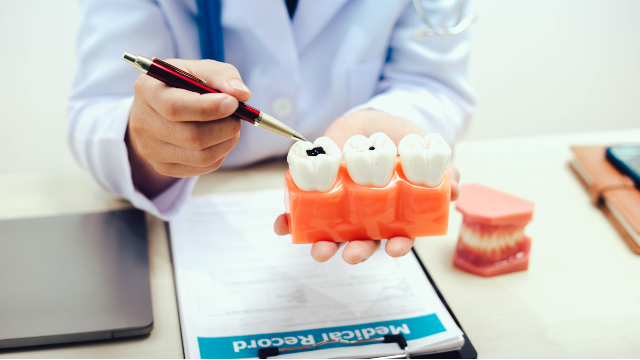
Cavity Treatment Korea: Resin Filling vs Inlay or Crown
A resin restoration is usually enough when decay is small and the tooth's walls and cusps are intact. Larger damage points to an inlay, onlay, or crown.
Learn More
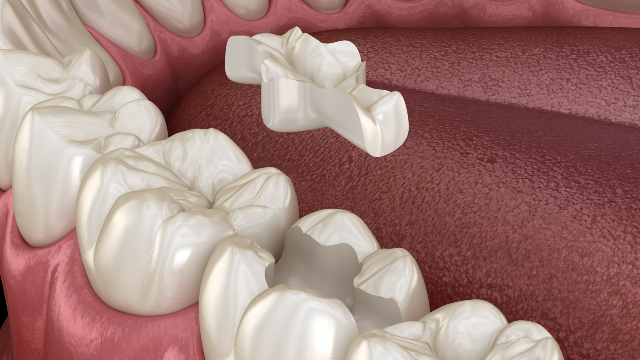
Inlay Onlay Dental Restoration vs Crown: How to Choose
An inlay or onlay restores a damaged tooth without full coverage. Published data show partial-coverage survival close to crowns, so choose by tooth left.
Learn More
Minish Dental Treatment: How It Preserves Tooth Structure
Minish dental treatment is a biomimetic restoration that rebuilds damaged teeth with precision-made blocks while removing as little enamel as possible.
Learn More