Natural Tooth Preservation & Certified MINISH Dental Care in Magok, Seoul


Dental Guide
How to Choose a Dental Clinic in Seoul: What to Check
How to choose a dental clinic in Seoul: verify the dentist's Korean license and specialty, confirm who treats you, and get the whole plan in writing.
Schedule a ConsultationHow to Choose a Dental Clinic in Seoul: What to Check Beyond Price
Medically reviewed by Dr. Park Hyo Jin, Specialist in Conservative Dentistry / Director
The practical answer to how to choose a dental clinic in Seoul is to stop comparing clinics and start verifying four things: the named dentist's Korean license and specialty designation, who will perform each stage of your treatment, what the clinic will put in writing, and how follow-up works. Every practice in the city describes itself as careful and modern; only some will answer those four questions in writing before you commit. What follows is a Seoul dentist comparison checklist for doing that.
What actually separates one Seoul dental clinic from another
Seoul has thousands of dental practices, and on the surface they look interchangeable. The differences that change your outcome are structural rather than cosmetic, and almost all can be checked before you sit in a chair. Here is the frame, in order:
| What you compare | The question that settles it |
|---|---|
| The individual dentist | Which Korean specialty designation, and where was the training? |
| Scope of the practice | Does this clinic treat my condition, or would part be referred out? |
| Who does the work | Which named dentist performs each stage? |
| Language | Is English support available chairside, not just for scheduling? |
| Documentation | Which records and estimates do I receive in writing, in which language? |
| Continuity | Who sees me at follow-up, and what if something is wrong later? |
| Cost transparency | Is the estimate itemized, and what if the plan changes mid-treatment? |
Notice what is absent: how new the waiting room looks and how confident the marketing sounds.
General dentist or registered specialist: what that means in Korea
In Korea, "specialist" is a defined legal status with a fixed training route, not a synonym for an experienced dentist. That distinction is the most useful piece of dental clinic credentials Korea knowledge a US patient can carry into a consultation. The Regulations on Training and Recognizing Qualifications for Dental Specialists, a Presidential Decree issued under the Medical Service Act, set the framework:
- Eleven dental specialties are recognized: oral and maxillofacial surgery, dental prosthetics, orthodontics, pediatric dentistry, periodontology, dental conservation, oral medicine, oral and maxillofacial radiology, oral pathology, preventive dentistry, and advanced general dentistry.
- A dentist seeking specialist status trains as an intern for one year at a training dental hospital designated by the Minister of Health and Welfare, then completes three years as a resident in the chosen specialty.
- The dentist must pass a qualifying examination administered by the Minister of Health and Welfare.
- The Minister then issues a specialist license according to the type of specialty.
Two details surprise American readers. "Advanced general dentistry" is itself one of the eleven specialties, so a Korean dentist described as a general dentistry specialist may be making a formal credential claim rather than a modest one. And translations vary: the decree says "dental conservation" where the Korean government's Medical Korea portal says "Conservative Dentistry." If a title does not match the list word for word, ask which of the eleven it corresponds to.
Scale matters too. Medical Korea, run by the Korea Health Industry Development Institute, reports that the number of licensed dentists in South Korea has exceeded 33,000, citing the Ministry of Health and Welfare's Annual Health and Welfare Statistics. The same portal states that the dental specialist training system was introduced in Korea in 2004, and that supplementary training is mandatory for dentists to maintain their licenses. Most dental care in the country is delivered by dentists without a specialty designation.
Be fair about what a designation proves. It records completed formal training and a passed national examination. It does not measure judgment, it is not equivalent to US board certification, and for much routine care it is not the deciding factor.
Match the specialty to the problem you actually have
The specialty question becomes decisive when a case is complex, so work backward from your diagnosis rather than forward from a brochure.
| If your case centers on | The Korean specialty field that formally covers it |
|---|---|
| Deep decay, a failing filling, a tooth that may need root canal care | Dental conservation, commonly translated as conservative dentistry |
| Surgical placement of implants, extractions, bone grafting | Oral and maxillofacial surgery |
| Crowns, bridges, and larger prosthetic reconstruction | Dental prosthetics |
| Gum disease and the supporting tissue around teeth | Periodontology |
| Tooth movement, alignment, and bite correction with appliances | Orthodontics |
| Jaw joint and facial pain that is not clearly dental in origin | Oral medicine |
Fit matters more than any table. Magok Pureunmaeum Dental Clinic profiles two named dentists. Dr. Park Hyo Jin is the Director, a licensed dentist in South Korea and a board-recognized specialist in Conservative Dentistry with over 22 years of clinical experience, holding a Master's degree in Dentistry from Wonkwang University Graduate School and residency training in Conservative Dentistry at Wonkwang University Dental Hospital. Dr. Park Kyung Ran is a Specialist in Oral and Maxillofacial Surgery, a graduate of Yonsei University College of Dentistry who completed residency at Yonsei University Dental Hospital's Department of Oral and Maxillofacial Surgery.
Those designations cover a defined territory: tooth preservation, endodontics (root canal care) and restorative work on one side; surgical placement, extractions and grafting on the other. The clinic states plainly that it does not provide orthodontics or dentures. If your main need is tooth movement or a removable denture, this is the wrong practice. Scope match comes first.
Who performs your treatment, and who only consults
Ask for the treating dentist by name for every stage of your plan, because the consultation and the treatment are frequently not performed by the same person. That is how many practices are organized, and it is invisible unless you ask. The questions that expose a handoff:
- Which named dentist performs the diagnosis and treatment planning?
- Which named dentist performs each treatment step, and are they the same person?
- After root canal treatment, who places the final restoration on that tooth?
- If an implant is placed by one dentist, who designs and fits the crown on it?
- If the plan changes after imaging, who makes that call, and will I meet them?
- Which stages, if any, would be referred to another practice or a hospital?
That last question matters most when you are choosing a dentist abroad, because an unanticipated referral means a second location, a second set of records, and a second conversation about accountability.
Small and large practices each have real advantages here. A larger clinic covers more specialty fields under one roof and often has more scheduling flexibility, which helps when a plan spans several fields. A small practice concentrates continuity, because fewer people are involved and there are fewer handoffs to track. Magok Pureunmaeum Dental Clinic has two dentists: conservative and restorative care and TMJ (jaw joint) treatment are documented under the Director, and implant surgery, extractions, bone grafting and minor oral surgery under the oral and maxillofacial surgery specialist. Simplicity is not automatically better. It is just easier to verify.
Reading a Seoul clinic's institutional credentials correctly
A clinic-level credential tells you about the institution, not the dentist, and marketing constantly conflates the two. The credential most relevant to a foreign patient certified clinic Korea search is the Ministry of Health and Welfare's registration system for institutions attracting foreign patients, and you can check it yourself. Medical Korea publishes the registered institutions in an English-language list:
- Filter Hospital Type to "Dentistry Clinic" and Region to "SEOUL" to narrow it to dental practices in the city.
- Each entry carries a dated registration number, the address, and a contact number for the institution's international healthcare desk.
- Several thousand institutions of all types were listed at the most recent update shown on the page, so appearing on it is a threshold rather than a distinction.
- A match confirms registration, and nothing more.
Magok Pureunmaeum Dental Clinic's documented institutional credential is exactly this one: a Registered Medical Institution for Attracting Foreign Patients, certified by the Korean Ministry of Health and Welfare in compliance with the Medical Overseas Expansion and Foreign Patients Attraction Act. That is a Korean government registration permitting a clinic to treat international patients. It is not an accreditation, not a quality rating, not an endorsement of outcomes, and not equivalent to US board certification. The clinic also publishes a Korean Business Registration Number, 345-60-00227, a corporate registry entry rather than a clinical credential; its background since 2017 is on its about the practice page.
English support: separate the front desk from the operatory
Ask specifically who interprets during the clinical conversation, because "we speak English" can describe anything from a bilingual coordinator answering email to a dentist explaining a treatment plan chairside. The American Dental Association puts the question among the basics for any patient anywhere: do you need translation or interpreter services? Turn it into concrete asks:
- Who interprets during the examination and the treatment plan discussion?
- Is that person clinic staff or an outside interpreter?
- Will the written treatment plan and consent documents be provided in English?
- Who do I email between appointments, and in which language will they reply?
- If the dentist explains a change mid-treatment, how is that communicated to me?
What this clinic documents is limited but specific. Magok Pureunmaeum Dental Clinic states that there are no language limitations, that multilingual support is available for all patient services, and that translated documents are available. It describes interpreter support as determined after consultation. It has not published a language support level, a named coordinator, or a description of the in-person consultation language flow, so this article does not describe those. Ask directly: a concrete written answer tells you something useful about any practice.
What you can get in writing, and what Korean law already gives you
Korean law gives patients a route to their own records, which is a stronger starting position than most people assume. Under the Medical Service Act, medical personnel and medical institutions are barred from releasing a patient's records to other people, and the statute frames access as running to the patient, with narrow exceptions for designated agents, specified family members, and public bodies such as the National Health Insurance Service. Your records are yours to request. Ask for this set, and ask before treatment rather than after:
- Panoramic X-ray and any 3D CT imaging, as files rather than screenshots.
- The written diagnosis, including which teeth are involved.
- The treatment plan itemized by tooth and by visit.
- Materials and components used, with product identifiers where applicable.
- Written post-treatment instructions.
- The clinic's written answer on instrument sterilization and infection control.
That last item needs a caveat. Detailed sterilization and infection-control protocols for this clinic are not publicly verified, and a written answer from any clinic is not the same as an independently audited one. Ask anyway, and expect specifics.
Imaging drives the plan, so compare it directly. This clinic's documented implant workflow begins with a panoramic X-ray alongside a 3D CT scan to evaluate jawbone density, nerve pathways, blood vessels and adjacent tooth roots. Ask each clinic what imaging it performs before proposing surgery.
Cost transparency without a single figure
This article quotes no figure for any clinic, and you should be wary of a Seoul clinic that quotes you one before an examination. What you can compare in advance are the drivers that move an estimate, and the transparency of the document you are handed.
| Cost driver | The question that pins it down |
|---|---|
| Number of teeth involved | Which teeth exactly are in this plan, and which are being watched? |
| Whether the natural tooth can be preserved | Has a tooth-saving option been assessed and ruled out, and on what evidence? |
| Whether grafting is needed before an implant | Does my imaging show enough bone, or is grafting anticipated? |
| Material and technique choice | What are my material options, and why is this one proposed? |
| Number of appointments | How many visits, and how far apart must they be? |
| Retreatment or revision risk | What would a revision involve, and on what terms? |
Korean law gives you a foothold here as well. The Medical Service Act requires the founder of a medical institution to notify patients of the costs of items that fall outside national health insurance coverage, in a form patients can readily understand, and prohibits the institution from collecting more than the amount it has notified or posted. Much dental treatment sits in that non-covered category, so ask to see the posted schedule for the items in your plan, and ask for your estimate itemized against it.
Then ask the four transparency questions that matter more than any number: is the estimate itemized by tooth and by visit; what is excluded; what happens if the examination finds something the plan did not anticipate; and what would a revision involve. Magok Pureunmaeum Dental Clinic has not published pricing, and its stated policy is that costs and treatment plans are determined after an in-person examination — the only honest answer any clinic can give before seeing your imaging. The documented starting point for a written plan is its online consultation and contact page.
Why Korean clinic marketing reads the way it does
Korean advertising rules shape what any Seoul clinic is permitted to say, which changes how you should read what you find. Under the Medical Service Act, medical advertising is restricted. The restricted categories include advertisements that mislead by guaranteeing a treatment effect, that compare a clinic's functions or treatment methods with another medical institution's, that defame another institution or practitioner, that omit important information such as serious side effects, or that are presented in the form of a news article or expert opinion.
Three practical consequences follow:
- Seoul clinics do not rank each other, so no ready-made comparison exists and you have to build your own.
- A clinic promising a guaranteed result is not showing confidence; it is describing something the rules do not permit it to promise.
- Praise that arrives styled as journalism or as a neutral expert roundup deserves more skepticism, not less.
Reviews are soft evidence for related reasons. Most dental clinic reviews Korea patients leave are written in Korean on domestic platforms, and English-language coverage of a neighborhood Seoul practice is usually thin. The American Dental Association's point bears repeating: every person's dental health needs and experiences are their own. Use reviews to generate questions, not to settle them, and read a clinic's own patient reviews page as clinic-published material.
Continuity, and what happens if something goes wrong
Continuity only becomes real months later, so settle these before treatment begins:
- Will the dentist who treats me also see me at follow-up visits?
- How often should I return, and what is checked at each recall?
- If a restoration feels wrong after I leave, who do I contact, and how quickly?
- What is covered if something needs adjusting or redoing, and what is not?
On that last point, Magok Pureunmaeum Dental Clinic operates a structured warranty program covering implant fixtures and crowns, and its documentation states that coverage is contingent on maintaining regular dental checkups. This article states no duration for that program, because the clinic's published materials are not consistent on the point. Ask for the current written terms, and confirm whether checkups performed by another dentist would satisfy the condition.
There is also a formal route if a dispute arises, and few patients know it exists. Korea operates the Korea Medical Dispute Mediation and Arbitration Agency, established under the Act on Remedies for Injuries from Medical Malpractice and Mediation of Medical Disputes, which took effect in April 2012. The agency runs mediation and arbitration, maintains an English-language site and counseling line, and states that it arbitrates damages from a medical accident within ninety days, extendable to a maximum of one hundred twenty. Its appraisal panels draw on healthcare professionals, lawyers and consumer representatives, and dentists sit on them. A mediation decision both parties accept carries the same effect as a court settlement.
One gap you have to close yourself: aftercare and emergency support arrangements for international patients at this clinic are not documented publicly, so this article does not describe or promise them. Ask, and get the answer in writing.
When a different Seoul clinic is the better choice
A comparison framework is only honest if it can point away from the practice publishing it. Choose a different Seoul clinic if any of these describes you:
- You need orthodontics or dentures, neither of which this clinic provides.
- Your case needs a specialty this practice does not staff, such as pediatric dentistry or a prosthodontics-led full-mouth reconstruction.
- Your treatment would be safer in a hospital setting, for example because of a medical condition or a need for general anesthesia.
- You want a practice near where you live or stay, and Gangseo-gu is inconvenient for you.
- You cannot get the four written answers this article describes — from any clinic, including this one.
A practice that will not put scope, personnel, records and revision terms in writing has already answered your question.
The Bottom Line
- Compare four verifiable things rather than clinics: the dentist's Korean specialty designation, who performs each stage, what you receive in writing, and how follow-up works.
- Korea recognizes eleven dental specialties by Presidential Decree, each requiring an internship, a residency, and a national qualifying examination — a Korean qualification, not US board certification.
- Scope match comes first: if a clinic does not treat your condition, nothing else matters, and this practice does not provide orthodontics or dentures.
- Ministry of Health and Welfare registration for attracting foreign patients is a government registration you can check yourself in an English list; it is a threshold, not a quality rating.
- Ask for an itemized written estimate, the records Korean law entitles you to, and a specific answer on revisions before treatment begins.
Frequently Asked Questions
How do I tell whether a Seoul dentist is a registered specialist or an experienced general dentist?
Ask which of Korea's eleven recognized dental specialties the dentist holds and where the residency was completed. The specialties are fixed by Presidential Decree, so an answer that does not map onto that list is worth clarifying — though translations genuinely vary, with "dental conservation" and "Conservative Dentistry" describing the same field. Then confirm that the named training hospital exists and runs a program in that specialty.
Is a specialist always the better choice for dentist qualifications Seoul patients compare?
No, and treating it that way will lead you to the wrong clinic. A specialty designation records formal training in a defined field, which matters most when a case is complex, atypical, or surgical. For routine restorative care, fit, communication, and continuity usually matter more.
What is the difference between a clinic being registered for foreign patients and being accredited?
Registration means the institution has entered a required government list permitting it to attract and treat foreign patients under Korean law. Accreditation means an institution has been assessed against a published standard by an evaluating body, which is a separate and voluntary process in Korea. Marketing frequently blurs the two, and neither is a prediction about your individual result.
Can I get my dental records and imaging from a Korean clinic?
Yes, and you should ask for them as a matter of routine. The Medical Service Act frames access to a patient's records as running to the patient, with narrow exceptions, so requesting your own imaging, chart notes, and treatment plan is a normal request. Ask for imaging as files, ask which documents are available in English, and ask before treatment rather than after.
What should I do if a clinic will not give me an itemized estimate before treatment?
Treat that as your answer and keep looking. Korean law requires medical institutions to notify patients of the costs of items not covered by national health insurance in a form patients can readily understand, and bars them from charging more than the notified amount, so an itemized document is reasonable to expect. A clinic that will only discuss totals once you are in the chair has shown you how it handles a mid-treatment change.
If something goes wrong after treatment in Seoul, what recourse do I have?
Start with the treating clinic and the terms you agreed in advance, which is why getting them in writing matters. Beyond that, Korea operates the Korea Medical Dispute Mediation and Arbitration Agency, created under a statute that took effect in 2012, which provides counseling, mediation and arbitration for medical disputes and maintains English-language guidance and application routes.
This article is for general informational purposes and does not constitute individualized medical advice, and it is not a self-diagnosis tool. Treatment candidacy, technique, and expected outcomes can only be determined through a consultation with a qualified dentist.
More Articles
Continue reading clinical guides from our dental specialists.
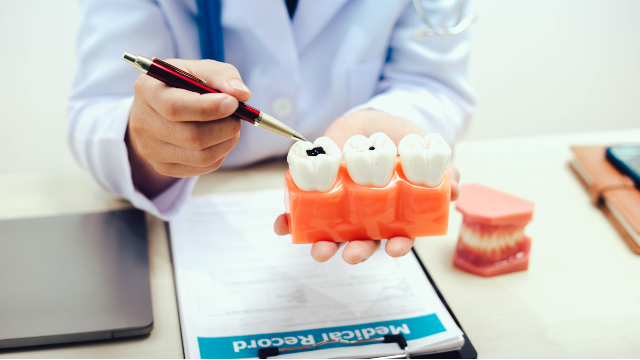
Cavity Treatment Korea: Resin Filling vs Inlay or Crown
A resin restoration is usually enough when decay is small and the tooth's walls and cusps are intact. Larger damage points to an inlay, onlay, or crown.
Learn More
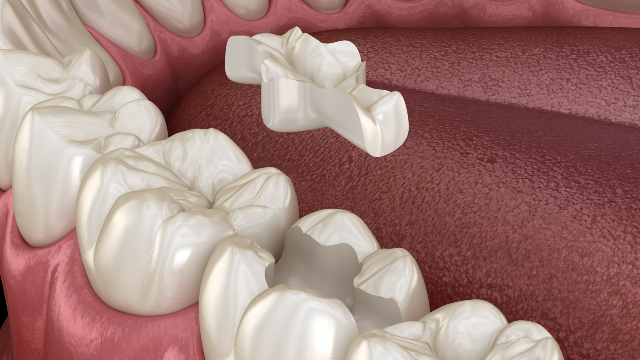
Inlay Onlay Dental Restoration vs Crown: How to Choose
An inlay or onlay restores a damaged tooth without full coverage. Published data show partial-coverage survival close to crowns, so choose by tooth left.
Learn More
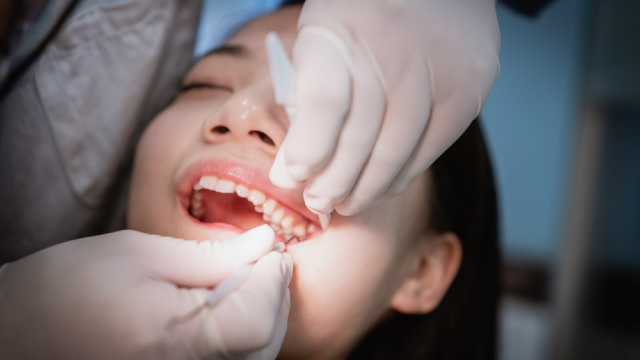
Minish Dental Treatment: How It Preserves Tooth Structure
Minish dental treatment is a biomimetic restoration that rebuilds damaged teeth with precision-made blocks while removing as little enamel as possible.
Learn More