Natural Tooth Preservation & Certified MINISH Dental Care in Magok, Seoul

Dental Guide
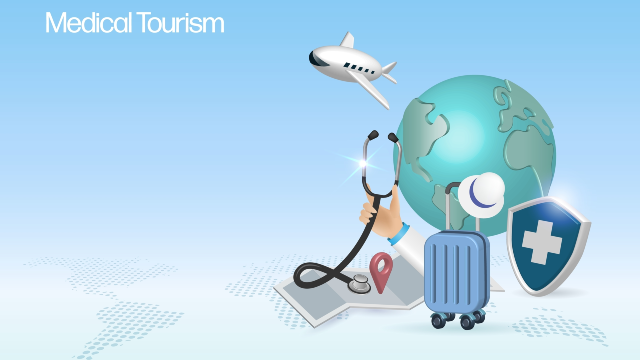
Dental Tourism Korea vs Mexico: How US Patients Compare
Comparing dental tourism in Korea vs Mexico means verifying the dentist's credentials, clinic registration, travel and trip length, and follow-up care.
Schedule a ConsultationDental Tourism in Korea vs Mexico: What US Patients Should Compare
Medically reviewed by Dr. Park Hyo Jin, Specialist in Conservative Dentistry / Director
If you are weighing dental tourism in Korea vs Mexico, the most useful comparison is not a ranking of countries. It is a checklist you can complete before you book: can you verify the individual dentist, can you verify the clinic's authorization to treat foreign patients, how long will you be away, and what happens if something needs attention after you fly home. A well-run practice in either country can produce a good result. What differs is how each system records credentials, how easily you can check them from the United States, and what a return visit costs you in time.
This is a verification framework, not a scoreboard. It draws on the CDC, the US Department of State, a state dental association, and the Korean government's own foreign-patient program, and it says clearly where a claim cannot be verified.
Why dental care is the most common reason Americans travel for treatment
Dental care is the most common form of medical tourism among US residents, according to the CDC Yellow Book's chapter on medical tourism. The CDC attributes this in part to the rising cost of dental care in the United States, noting that a substantial proportion of people in the United States either have no dental insurance or are underinsured. The same chapter reports that US medical tourists most commonly travel to Mexico, Canada, the Caribbean, and several countries in South America.
That explains the volume of marketing, and it is why the CDC warns that medical tourism websites marketing directly to travelers "might not include (or make available) comprehensive details on the accreditations, certifications, or qualifications of advertised facilities or healthcare professionals."
Step 1: Verify the individual dentist, not the clinic's brand
Start with the person who will hold the handpiece, because a clinic name tells you nothing about who treats you. Ask for the treating dentist's full name, the license number they practice under, the authority that issued it, and the specialty designation they claim. Then check that with the issuing authority rather than with the clinic.
Mexico has a genuine advantage here, and it is worth stating plainly. Dentists practicing in Mexico hold a federal professional license, the cédula profesional, issued through the Secretaría de Educación Pública, and the Registro Nacional de Profesionistas is a public online registry where a name or license number can be looked up. That is a free first-party check that takes minutes.
Korea's individual records are less convenient to search from the United States, because the practical public lookups are Korean-language. So ask the clinic in writing for the treating dentist's specialty designation, the university where the degree was earned, and the hospital where residency training was completed. Then confirm those institutions exist and offer that training. An anonymous "team of experienced dentists" is not verifiable in any country.
For an example of what a checkable answer looks like, Magok Pureunmaeum Dental Clinic in Seoul profiles two named dentists:
- Dr. Park Hyo Jin is the Director and a Specialist in Conservative Dentistry, with over 22 years of clinical experience.
- Dr. Park Hyo Jin holds a Master's Degree in Dentistry from Wonkwang University Graduate School and completed internship and residency training in Conservative Dentistry.
- Dr. Park Kyung Ran is a Specialist in Oral and Maxillofacial Surgery who graduated from Yonsei University College of Dentistry.
- Dr. Park Kyung Ran completed internship and residency at Yonsei University Dental Hospital's Department of Oral and Maxillofacial Surgery, followed by Master's and Doctoral programs in the same field.
Two points hold regardless of destination. A Korean specialist designation is a Korean qualification, not US board certification, and should not be read as equivalent to it. And the CDC notes that dentists in destination countries "might not be subject to the same licensure oversight as their U.S. counterparts" — a reason to verify, not a verdict on any one country.
Step 2: Understand what a registration or accreditation actually certifies
This is where marketing language does the most damage, so precision matters. A government registration means an institution has entered a required regulatory list. An accreditation means an institution was assessed against a published standard. They are not the same thing, and neither is a promise about your particular result.
Korea's system is easy to describe because it is documented in English. Since 2009 the Korean Ministry of Health and Welfare has operated a registration system for medical institutions that attract foreign patients, administered through the Medical Korea program of the Korea Health Industry Development Institute. Under the Medical Overseas Expansion and Foreign Patients Attraction Act, attracting foreign patients without that registration carries criminal penalties. Since 2016, registered institutions have been required to carry medical malpractice liability insurance. The registered institutions appear in a searchable English-language list filterable by facility type, including dentistry clinics.
Korea also runs a separate voluntary program: the Korean Accreditation Program for Hospitals Serving Foreign Patients, an evaluation and certification system that institutions apply for, assessing a foreign-patient profiling system and a patient safety system against published criteria. Its certified institutions are listed publicly, and the list is short. Confusing the two is the most common overstatement in dental travel marketing.
Magok Pureunmaeum Dental Clinic's documented regulatory credential is the first of those two, and only the first. The clinic is a Registered Medical Institution for Attracting Foreign Patients certified by the Ministry of Health and Welfare in compliance with the Medical Overseas Expansion and Foreign Patients Attraction Act. That is a Korean government registration permitting the treatment of foreign patients. It is not a quality rating, not an endorsement of outcomes, and not equivalent to US board certification. The clinic also publishes its Korean Business Registration Number, 345-60-00227, a separate corporate registry entry.
For Mexico the verification question is the same, but you have to ask it rather than look it up in English. Ask which authority authorizes the clinic to provide the treatment you need and how you can confirm it independently. The State Department's Mexico country information page notes that medical systems abroad operate under different rules and regulations, and advises confirming before any planned surgery that emergency medical facilities are available and that the professionals involved are accredited and qualified. That is sound advice for Seoul too. And one CDC caution applies everywhere: accreditation does not guarantee a good outcome.
Step 3: Cost drivers and the transparency questions that matter
You will not find a price in this article, and you should be skeptical of any figure you find online for your own case, because a dental estimate comes from an examination and imaging, not from a country. US private dental care is widely described as expensive, and that is a genuine reason people look abroad. What you can compare in advance is the drivers that push a plan up or down.
Cost drivers to identify before you compare anything:
- How many teeth are actually being treated, and whether adjacent teeth need work too.
- Whether the plan is restorative, endodontic (root canal care), surgical, or a combination.
- Whether bone grafting or a sinus lift is needed before implant placement, which is decided from imaging.
- Which materials are chosen for crowns, inlays, onlays, or other restorations.
- How many appointments the plan needs, and whether they fit into one trip or require two.
- Travel, lodging, and time away from work for every trip the plan requires.
- The realistic possibility of retreatment or revision, and who pays for it.
Transparency questions to ask in writing, before you commit:
- Can I have an itemized written estimate listing each tooth and each procedure?
- What is specifically excluded from that estimate?
- What happens to the plan if the examination on arrival finds something the remote consultation missed?
- If a restoration needs to be redone, what does that involve and what would it cost?
- Which parts of follow-up care are included, and which are billed separately?
Two of those come straight from public guidance. The CDC advises medical tourists to make sure they understand which services are included in the cost of their procedures, noting that some overseas facilities charge substantial fees for follow-up care on top of the base cost. The California Dental Association makes the blunter point that the real total includes travel and time commitment plus the potential cost of retreatment back home, and that expected savings can turn out to be illusory.
Magok Pureunmaeum Dental Clinic has not published pricing, and this article does not estimate any. Costs and treatment plans are determined after an examination — the only honest answer any clinic can give before seeing your imaging. If you want a written plan, the clinic's online consultation and contact page is the documented starting point.
Step 4: Travel, trip length, and recovery time
Geography is the clearest difference between these two destinations, and it cuts against Korea. Mexico shares a land border with the United States and is reachable by a short flight from much of the country, and by a land crossing for border-region residents. South Korea requires a transpacific flight. Seoul is served by Incheon International Airport (ICN) and Gimpo International Airport (GMP); Magok Pureunmaeum Dental Clinic is in Gangseo-gu, Seoul, on the third floor of Woosung SB Tower at 385 Gangseo-ro, about 50 meters from Exit 2 of Balsan Station on Seoul Metro Line 5.
Entry requirements change, and this is one place to trust a primary source over any clinic or agency. Confirm current requirements on the State Department's country information page for your destination before you buy a ticket. For South Korea, that page covers passport and visa requirements and the status of the Korea Electronic Travel Authorization (K-ETA), which has been subject to a temporary exemption extended more than once. Treat any secondhand summary of K-ETA rules, including a clinic's, as out of date until you check.
Trip length is driven by the treatment plan, not the destination. Ask the clinic, in writing, how many appointments the plan needs, how many days must separate them, and whether the work can be completed in one trip. If a plan needs two separated visits, two short trips across a land border are a far smaller burden than two transpacific trips.
Recovery deserves its own question. The CDC cautions that typical vacation activities during the post-operative period — alcohol, strenuous exercise, sunbathing, swimming, long tours — can delay or impede healing, and that travel and procedures each independently raise the risk of blood clots. Ask how soon after treatment you can fly, a question the California Dental Association also puts on its patient list. Healing varies between people, so treat any timeline as an estimate rather than a guarantee.
Step 5: Continuity of care, the honest weak point of any dental travel
Everything above is checkable before you leave. Continuity of care only becomes real after you land back home, and it is the weakest link in dental travel to any country.
The CDC's guidance is specific. Medical tourists should discuss the plan for handling complications with both their US clinician and the clinician treating them abroad. They should check their domestic health insurance for what, if anything, is covered outside the United States. They should ask whether follow-up care is scheduled at the same facility as the procedure. They should request copies of their records in English. And they should know that if complications develop, they might not have the same legal recourse they would have had at home. The California Dental Association adds questions worth asking any overseas dentist: how follow-up visits will be handled, whether the work is guaranteed for a defined period, whether complications are addressed at no charge, and whether the dentist carries malpractice insurance.
Here is where Mexico's proximity is a clinical advantage, not just a convenience. If a crown needs adjusting, a temporary comes loose, or a restoration needs review months later, a short return trip is realistic. A transpacific return trip for a minor adjustment usually is not.
If you are considering Korea, ask rather than assume. Magok Pureunmaeum Dental Clinic's aftercare and emergency support arrangements for international patients are not published, so this article will not describe, promise, or imply them. Ask the clinic directly what happens if you have a problem after returning to the United States, who you contact, in what language, and whether there is any charge. Get that in writing before you travel, and do the same with any clinic in any country.
Step 6: Language, records, and what you can confirm in advance
Credentials, English communication, safety and sterilization, cost transparency, and follow-up after returning home are the concerns US patients raise most often about treatment abroad. Each can be turned into a document request.
- Ask for the treatment plan in English, itemized by tooth.
- Ask for copies of your imaging and clinical notes in English, which is the CDC's explicit recommendation.
- Ask how appointments will be conducted in your language, and who provides interpretation.
- Ask the clinic to describe its instrument sterilization and infection-control protocol in writing, and note that a written answer from a clinic is not the same as an independently verified one.
- Ask which regulatory body oversees health and safety standards for dental practices in that country, a question the California Dental Association recommends putting to the clinic.
On language specifically, Magok Pureunmaeum Dental Clinic states that there are no language limitations and that multilingual support is available for all patient services, and describes interpreter support as determined after consultation. The clinic's about the practice page covers its background: established in 2017, treating across eight specialty areas and sixteen listed services, and explicitly not providing orthodontics or dentures. If a service you need is not on a clinic's list, distance is irrelevant.
Side-by-side: what to check, and where
| What to check | South Korea | Mexico |
|---|---|---|
| Who licenses the dentist | Licensed under Korean law, with nationally recognized specialty designations | Federal license (cédula profesional) issued through the Secretaría de Educación Pública |
| Looking up the individual from the US | Public lookups are Korean-language; request credentials in writing and confirm the training institutions | Registro Nacional de Profesionistas is searchable by name or license number |
| Program specific to treating foreign patients | Ministry of Health and Welfare registration since 2009, with a searchable English list filterable to dentistry clinics | Ask which authority authorizes the clinic to treat international patients, and how to verify it |
| Separate quality accreditation | Voluntary program, publicly listed and distinct from registration | Ask whether the clinic holds any accreditation, and from which body |
| Malpractice insurance | Required of registered foreign-patient institutions since 2016 | Ask the dentist directly, as the California Dental Association recommends |
| Getting there | Transpacific flight; Seoul served by ICN and GMP | Land border with the US; short flights or a land crossing for many patients |
| Entry requirements | Confirm on the State Department's South Korea page, including current K-ETA status | Confirm on the State Department's Mexico page |
| Return visit for a small adjustment | Costly in time and money | Comparatively easy — a genuine advantage |
When Mexico is the better choice
There are clear situations in which the nearer destination is the right answer.
- Your plan is likely to need hands-on adjustment, review, or staged appointments over months.
- You cannot take a long block of leave, or cannot be far from work and family obligations.
- You want to be able to return to the same treating dentist inexpensively if something feels wrong.
- You want to verify the dentist's license yourself, in a public registry, before committing.
- You live in a border state and can drive to the appointment rather than fly.
When Korea may fit the situation better
- You want an institution-level, English-language, government-published check that a clinic is registered to treat foreign patients.
- You want a named specialist with a documented university and residency path rather than an unnamed team.
- Your case is diagnostically complex and you value a specialist-led assessment of whether a tooth can be preserved.
- You can commit a single continuous block of travel and complete the plan in one trip.
- You were already planning to travel to Korea, and the dental work fits inside that trip rather than creating it.
If neither list describes you, the timing may be wrong rather than the country. A staged plan you cannot return for is not a bargain in any currency.
The Bottom Line
- Compare verification, not marketing: the dentist's named credentials, the clinic's regulatory status, trip length, and the written follow-up plan are the four things that actually differ.
- Mexico's proximity and its public federal license registry are real advantages, and a plan likely to need adjustment is a strong reason to choose the nearer destination.
- Korea's Ministry of Health and Welfare operates a registration system for institutions treating foreign patients, published in English and searchable by facility type; Magok Pureunmaeum Dental Clinic is registered under it, which is a government registration and not a quality rating.
- No article can quote your price. Compare cost drivers — number of teeth, grafting, materials, number of visits and trips, retreatment risk — and insist on an itemized written estimate.
- Ask every clinic, in writing, what happens if something needs attention after you fly home, and do not assume aftercare that has not been described to you.
Frequently Asked Questions
Is dental care in Korea safer than dental care in Mexico?
That question cannot be answered at the level of a country, and no source cited here answers it. Both countries license dentists, and the CDC notes that all procedures carry some risk regardless of where they are performed. What you can compare is specific: the named dentist's credentials, the clinic's regulatory status, its written infection-control answer, and its written follow-up plan.
How do I check that a Korean clinic is allowed to treat foreign patients?
Korea's Ministry of Health and Welfare has operated a registration system for institutions attracting foreign patients since 2009, and registered institutions are published in an English-language list through the Medical Korea program that can be filtered by facility type, including dentistry clinics. Search that list for the clinic's name before you contact it. Treat a match as confirmation of registration only, not as an assessment of clinical quality.
Can I verify a Mexican dentist's license myself?
Yes, and this is one of the more straightforward verifications available to a US patient anywhere. Dentists in Mexico hold a federal professional license issued through the Secretaría de Educación Pública, and the Registro Nacional de Profesionistas is a public online registry searchable by name or license number. Ask the clinic for the dentist's full legal name and license number, then check the registry yourself rather than accepting a screenshot.
Will my US dental insurance cover work done in Korea or Mexico?
You have to check your own plan, because coverage for care outside the United States varies and cannot be assumed. The California Dental Association raises a second question patients often miss: whether your plan would cover redoing a procedure performed abroad. Get the answers from your insurer in writing before you commit.
Do I need a visa or travel authorization to visit Korea for dental treatment?
Confirm current entry requirements on the State Department's South Korea country information page before booking, rather than relying on a clinic's summary or an older article. The Korea Electronic Travel Authorization (K-ETA) has been subject to a temporary exemption that has been extended more than once, so the rule that applied last year may not apply to your trip. That page also covers passport requirements and overstay consequences.
What does Magok Pureunmaeum Dental Clinic document publicly?
It documents two named dentists: Dr. Park Hyo Jin, Director and Specialist in Conservative Dentistry with over 22 years of clinical experience, and Dr. Park Kyung Ran, Specialist in Oral and Maxillofacial Surgery, trained at Yonsei University. It also documents its address in Gangseo-gu, Seoul near Balsan Station, its establishment in 2017, its Korean Business Registration Number, and its Ministry of Health and Welfare registration as an institution for attracting foreign patients. Published hours are Monday and Wednesday through Friday 9:30 AM to 6:30 PM KST, Tuesday until 8:30 PM KST, and Saturday 9:30 AM to 2:00 PM KST, closed Sundays and public holidays. Pricing, interpreter staffing, and international-patient aftercare arrangements are not published, so ask about all three directly.
This article is for general informational purposes and does not constitute individualized medical advice, and it is not a self-diagnosis tool. Treatment candidacy, technique, and expected outcomes can only be determined through a consultation with a qualified dentist.
More Articles
Continue reading clinical guides from our dental specialists.
Cavity Treatment Korea: Resin Filling vs Inlay or Crown
A resin restoration is usually enough when decay is small and the tooth's walls and cusps are intact. Larger damage points to an inlay, onlay, or crown.
Learn More
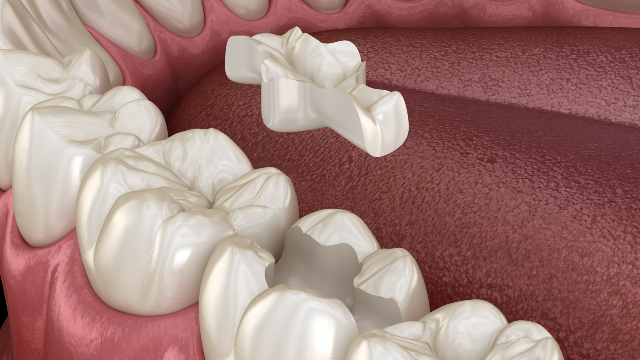
Inlay Onlay Dental Restoration vs Crown: How to Choose
An inlay or onlay restores a damaged tooth without full coverage. Published data show partial-coverage survival close to crowns, so choose by tooth left.
Learn More
Minish Dental Treatment: How It Preserves Tooth Structure
Minish dental treatment is a biomimetic restoration that rebuilds damaged teeth with precision-made blocks while removing as little enamel as possible.
Learn More